Short answer
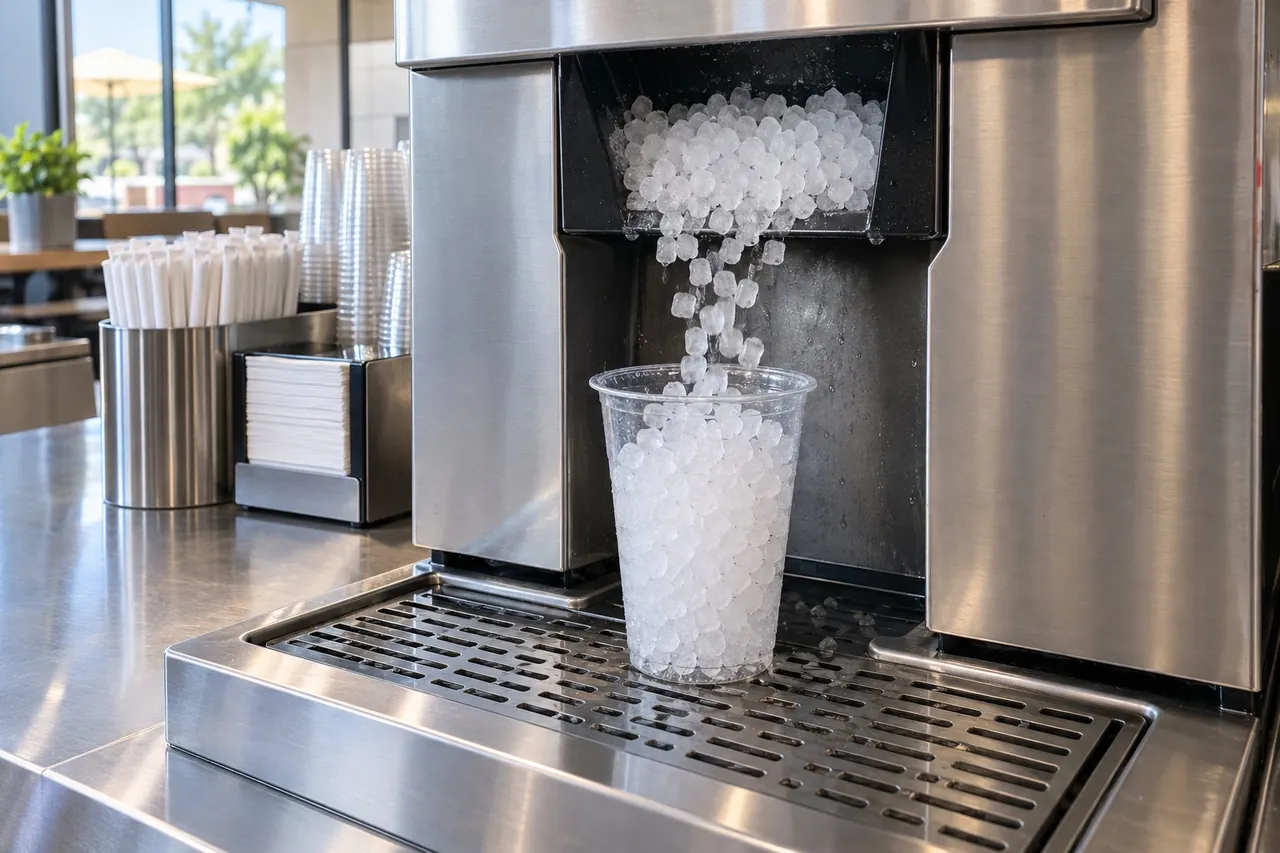
A commercial water and ice dispenser delivers ice, and often chilled water, into a cup by push-button, lever or sensor, so customers and staff never touch the stored ice. Self-contained countertop models typically make about 100–200 kg (220–440 lb) of nugget or flake ice a day; larger dispensers are fed by an ice machine head on top and store about 40–230 kg (90–500 lb).
Key takeaways
- Ice dispensers come in two forms: self-contained units that make and dispense ice, and storage dispensers fed by an ice machine head mounted on top.
- Countertop ice and water dispensers typically make 100–200 kg (220–440 lb) of nugget or flake ice a day and store about 4–11 kg (10–25 lb).
- Hotels typically plan about 2.5 kg (5.5 lb) of ice per room per day, so a 40-room floor needs roughly 120 kg (265 lb) including a 20% peak margin.
- Under the 2010 ADA Standards, self-serve controls should sit within a 15–48 in (380–1,220 mm) reach range and work with one hand and no more than 5 lbf (22 N).
- Dispensing chutes and nozzles need daily cleaning; the whole water and ice system needs descaling and sanitising at least every 6 months.
What is a commercial water and ice dispenser?
A commercial water and ice dispenser is a machine that delivers ice, and usually chilled water, directly into a cup or jug when the user presses a button, pushes a lever or holds the cup under a sensor. The stored ice stays sealed inside the cabinet, so nobody reaches into a bin with a scoop or a hand.
There are two basic designs:
- Self-contained ice makers with dispensers: the ice maker water dispenser freezes its own ice, usually nugget or flake, and dispenses it from a small internal bin. These are common in offices, clinics and hotel corridors.
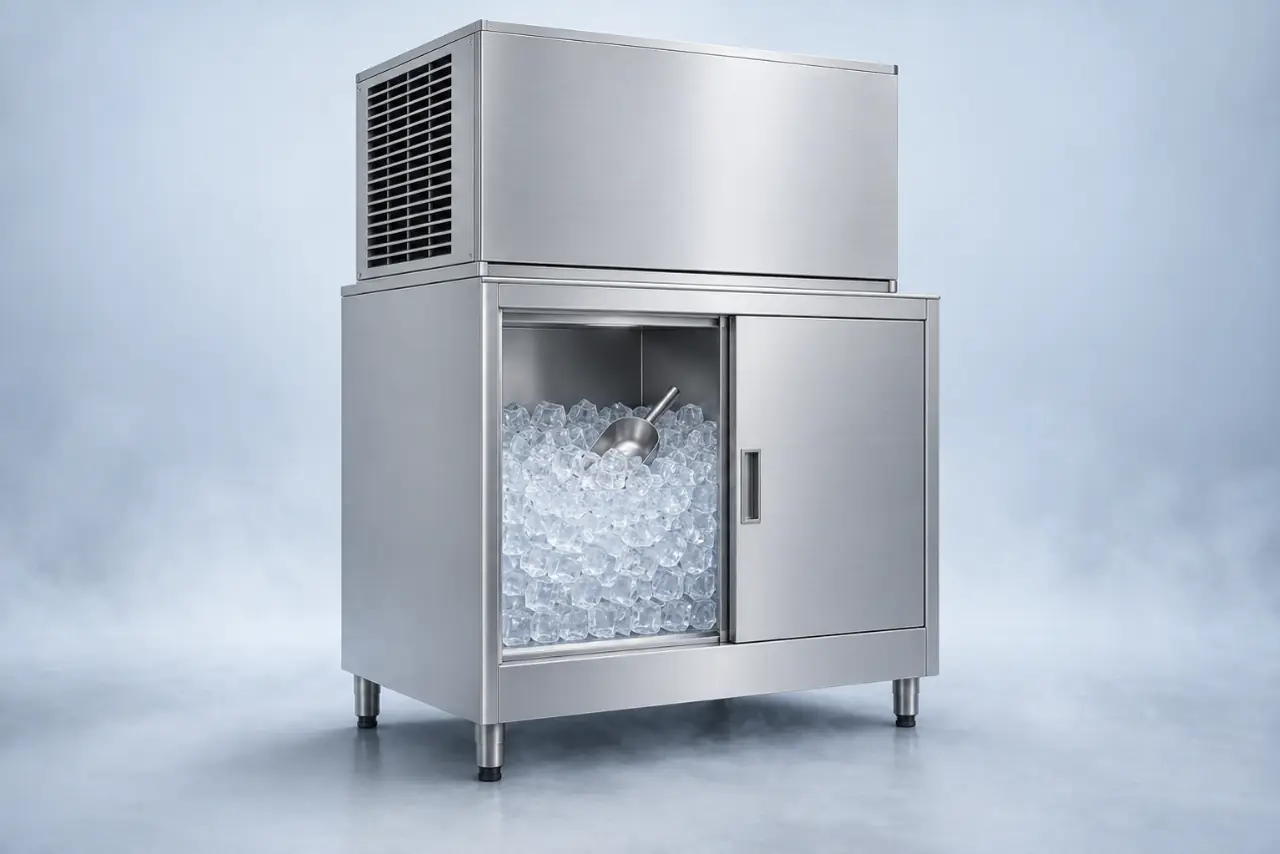
- Storage dispensers: a separate ice machine head sits on top of a dispensing bin and keeps it filled. This is the format behind most self-serve drink stations and the familiar ice machine on top of soda machine layout.
Be There supplies the ice-making side: cube ice machines from 50 to 1,000 kg (about 100–2,200 lb) per day and nugget ice machines from 150 to 500 kg (330–1,100 lb) per day. Tell us the dispenser or bin you plan to use and we will confirm which head fits it, or ask us about matching dispenser options.
Types of ice dispensers and where they fit
Typical formats, with indicative ranges that vary by model:
| Type | Ice | Typical production per 24 h | Typical storage | Typical sites |
|---|---|---|---|---|
| Countertop ice and water dispenser | Nugget or flake | 100–200 kg (220–440 lb) | 4–11 kg (10–25 lb) | Offices, clinics, break rooms |
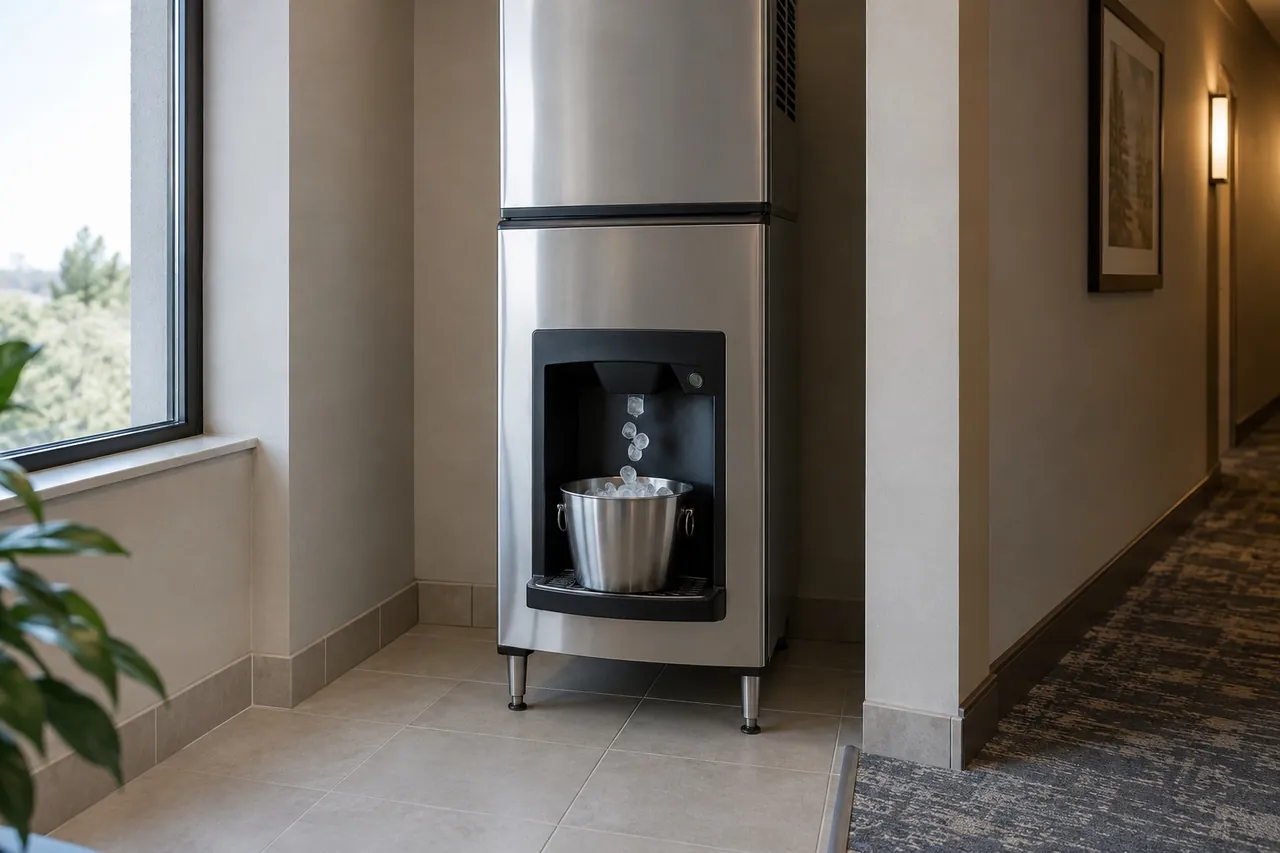
| Hotel ice dispenser (floor-standing) | Cube, crescent or nugget | 100–200 kg (220–440 lb) | 20–55 kg (45–120 lb) | Hotel corridors, dormitories |
| Ice/beverage dispenser with head on top | Cube, crescent, nugget | Set by the head: 150–500 kg (330–1,100 lb) | 40–230 kg (90–500 lb) | Quick-service restaurants, convenience stores |
| Stand-alone ice dispenser with head on top | Cube or nugget | 150–500 kg (330–1,100 lb) | 40–230 kg (90–500 lb) | Cafeterias, hospitals, stadiums |
| Flake / crushed ice dispenser | Flake or crushed | 100–300 kg (220–660 lb) | Small bin or none | Healthcare, cocktail service |
A stand alone ice dispenser that only dispenses ice suits cafeterias and drinks counters where water and soft drinks come from separate taps. A commercial ice and water dispenser combines both outlets and is the usual choice for offices, wards and staff areas.
A flake ice dispenser or commercial crushed ice dispenser is popular in hospitals because soft ice is easy for patients to chew and fills ice packs well. For drinks counters, cube or nugget is more common.
Why dispensers are more hygienic than open ice bins
Ice is food. Under the FDA Food Code and most national food codes, ice for drinks must be made from potable water, handled with clean utensils and protected from contamination. Open bins rely on staff using scoops correctly, every time. A dispenser removes the human contact point.
- Self-service: health inspectors generally expect ice for customer self-service to come from a dispenser, not an open bin with a shared scoop.
- Hands-free dispensing: sensor or cup-lever activation means hands never touch the chute. Push-button models should have buttons that are easy to wipe.
- Sealed storage: the bin is closed, so dust, splashes and glass fragments cannot fall in.
- Separate cooling ice: ice used to chill bottles, produce or seafood must never go back into drinks; keep it in a separate bin.
Cleaning routine
- Daily: clean and sanitise the dispensing chute, nozzle, splash panel and drip tray, and check the drain is clear.
- Monthly: clean the condenser on air-cooled units and inspect the drain line.
- Every 6 months or more often: descale and sanitise the whole water and ice system, including the agitator or auger in the bin, and change the water filter.
The full procedure, with a cleaning log, is in our guide on how to clean a commercial ice machine.
Hotel ice makers and hotel ice dispensers
Hotels usually place one hotel ice maker or dispenser on every floor or every second floor, close to the lifts. A hotel ice dispenser beats an open bin in corridors because guests fill buckets themselves and nobody can touch or contaminate the stock.
How much ice per room?
A common planning figure is about 2.5 kg (5.5 lb) per room per day, plus 20% for peaks. A floor of 40 rooms therefore needs 40 × 2.5 × 1.2 = 120 kg (about 265 lb) a day. Resort hotels in hot climates, or floors with suites and kitchenettes, often use more. Banqueting and bars are sized separately.
Accessibility
Under the 2010 ADA Standards for Accessible Design in the US, controls on self-service equipment should be within a reach range of 15–48 in (380–1,220 mm) above the floor, operable with one hand, without tight grasping or twisting, and with no more than 5 lbf (22 N) of force. Check the dispense button height and the space in front of the unit.
Noise and placement
Hotel ice machines run through the night, so put them in an alcove or vending room with a door, away from bedroom walls. Provide ventilation for air-cooled units, a floor drain, and a water filter. Where corridors are hot or enclosed, a water-cooled or remote condenser keeps output up and noise down.
Older hotels often replace a used hotel ice machine with a dispenser for hygiene reasons alone; the change also reduces wasted ice.
Restaurant, office and healthcare ice dispensers
Restaurants and drink stations
A restaurant ice dispenser at a self-serve soda station is normally an ice/beverage dispenser: drink valves on the front, an ice chute in the middle and an ice machine head on top. When the bin level drops, the head refills it automatically. Choose cube, crescent or nugget ice; nugget is a selling point in many markets. Size the head for the lunch peak, because a refill takes time.
Offices and break rooms
An office ice dispenser is usually a countertop nugget unit with chilled water, plumbed to the mains with a filter and drain. It replaces bottled water coolers and freezer trays. A bottleless water cooler and ice dispenser cuts bottle deliveries and storage.
Hospitals and care homes
Healthcare buyers typically plan about 4.5 kg (10 lb) of ice per bed per day. Wards use hands-free nugget or flake dispensers for patient drinks and ice packs, and many facilities specify antimicrobial components and sensor dispensing. A nugget ice dispenser paired with a Be There commercial nugget ice machine suits wards where patients find hard cubes difficult.
Hot and cold water machines
A hot and cold water machine adds a heated tap for tea and instant food. If you need ice too, choose a hot cold water dispenser ice machine combination with child-safety locks on the hot tap, or keep ice and hot water as separate units.
How to size a commercial ice dispenser
Sizing a commercial ice dispenser has two parts: production per 24 hours, and storage to cover the busiest hour.
| Site | Planning figure | Example | Daily demand incl. 20% peak |
|---|---|---|---|
| Hotel floor | 2.5 kg (5.5 lb) per room | 40 rooms | About 120 kg (265 lb) |
| Restaurant | 1–1.5 kg (2.2–3.3 lb) per seat | 80 seats at 1.25 kg | About 120 kg (265 lb) |
| Hospital ward | 4.5 kg (10 lb) per bed | 30 beds | About 162 kg (357 lb) |
| Office | Roughly 0.5–1 kg (1–2 lb) per person | 100 staff at 0.5 kg | About 60 kg (130 lb) |
Then check storage. If 40% of daily use happens in a two-hour lunch rush, the bin must hold most of that rush, because the head cannot make it fast enough. Correct production for room temperature: divide demand by 0.85 for a warm room and 0.75 for a hot one. The ice machine size calculator does these steps for you.
If demand exceeds one dispenser, two smaller units in different locations reduce queues and give redundancy when one is being cleaned or serviced.
Fridges with ice dispensers, outdoor units and ice dispenser businesses
Refrigerators with ice and water dispensers
A household fridge with ice dispenser or refrigerator with ice and water dispenser typically makes only 1–2 kg (2–4 lb) of ice a day. A mini fridge with ice dispenser, under counter fridge with ice dispenser or bar fridge with ice dispenser is a home convenience, not a business solution. In a bar or office kitchen, pair a commercial refrigerator with a dedicated ice machine or dispenser.
Outdoor ice dispensers
An outdoor ice dispenser needs a weatherproof cabinet, an ambient rating for summer heat, freeze protection for water lines in winter and secure payment if ice is sold. For selling bagged ice outdoors, lockable ice merchandisers holding −12 °C to −6 °C (10–21 °F) are the usual choice.
Ice dispenser business and locations
Searches for the nearest ice dispenser, ice dispenser locations or an ice dispenser franchise usually refer to self-serve ice vending kiosks that sell bags or bulk ice 24/7. That is a different product from an indoor dispenser; see our guide to starting an ice vending machine business for costs, output and site selection.
Installation, maintenance and buying a used ice dispenser
Installation checklist
- Water: potable supply at about 1.4–5.5 bar (20–80 psi) with an inlet filter sized to daily output.
- Drain: a gravity drain with an air gap for the bin and drip tray; dispensers produce meltwater all day.
- Power: exact voltage and frequency, such as 115 V/60 Hz or 220–240 V/50 Hz, on a dedicated circuit.
- Ventilation: clearance around air-cooled condensers, or a water-cooled or remote condenser for enclosed spaces.
- Certification: NSF/ANSI 12 and UL/ETL in the US, CE in Europe, or local equivalents.
Used ice dispenser for sale: what to check
A used ice dispenser can be good value, but inspect the bin for cracks, scale and slime; check the agitator or auger, the dispensing gate and the drip tray drain; confirm the refrigerant type is still serviceable in your market; and ask for service records. Budget for a full descale, sanitise and new filter before first use.
Wear parts on ice dispensers include the dispense motor, gate solenoid, agitator, sensors and water valves. Order a small spares kit with any new dispenser if you are importing.
How to choose a water and ice dispenser: checklist
- Define the users: guests, customers, staff or patients.
- Choose the ice: cube or crescent for drinks, nugget for cafés and healthcare, flake for ice packs and cocktails.
- Decide on water: ice only, ice and chilled water, or hot and cold water as well.
- Calculate demand per day and per peak hour, then correct for room temperature.
- Pick the format: countertop, floor-standing or a storage dispenser with a head on top.
- Check hygiene features: hands-free dispensing, sealed bin, easy-clean chute and drip tray.
- Confirm accessibility and utilities: reach range, water, drain, power and ventilation.
Be There supplies cube ice machines and nugget ice machines that feed dispensers and bins, quoted FOB, CIF or DDP. Send your site type, daily demand, ice shape, dispenser model if you have one, and power supply through the quotation form; we reply within one working day.