Short answer
An ice vending machine business sells bagged or bulk ice, often with filtered water, from a self-serve kiosk that makes ice on site. New machines typically cost about US$20,000–50,000 for smaller units and US$90,000 or more for high-capacity models, plus site work and permits. Output commonly ranges from about 450 kg (1,000 lb) to several tonnes a day.
Key takeaways
- Ice vending kiosks combine water treatment, ice machine heads, an insulated bin, a bagging or bulk chute and a card or coin payment system.
- In the US, new ice vending machines typically cost about US$20,000–50,000 for smaller units and US$90,000+ for high-capacity models; used units often sell for US$10,000–50,000.
- Operators report variable costs of roughly US$0.30 per 10 lb (4.5 kg) bag of ice made on site, against typical retail prices of US$1–3 per bag.
- Every 100 lb (45 kg) of ice contains 12 US gallons (45 L) of water, plus purge and treatment water.
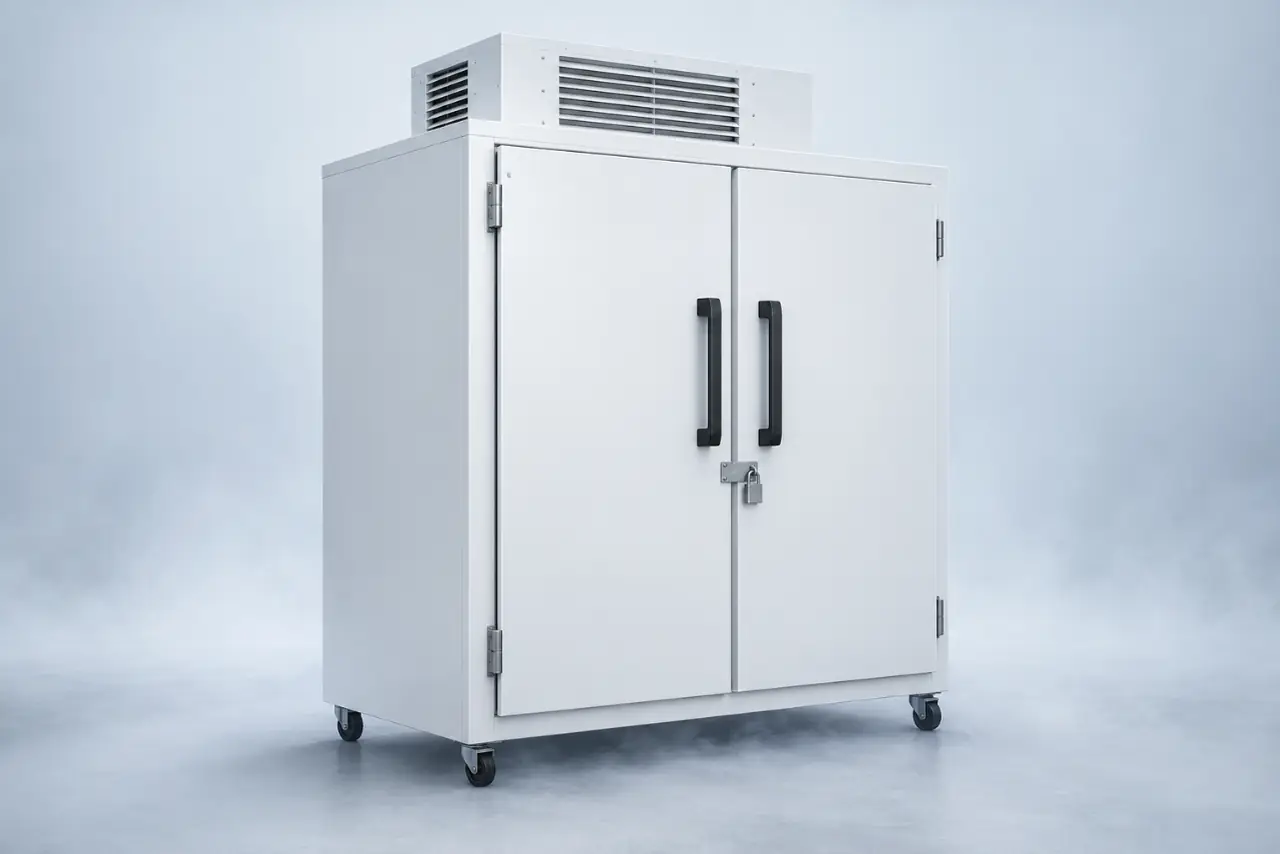
- A bagged ice business can instead use commercial ice machines, a bagging station and lockable ice merchandisers held at −12 °C to −6 °C (10–21 °F).
What is an ice vending machine business?
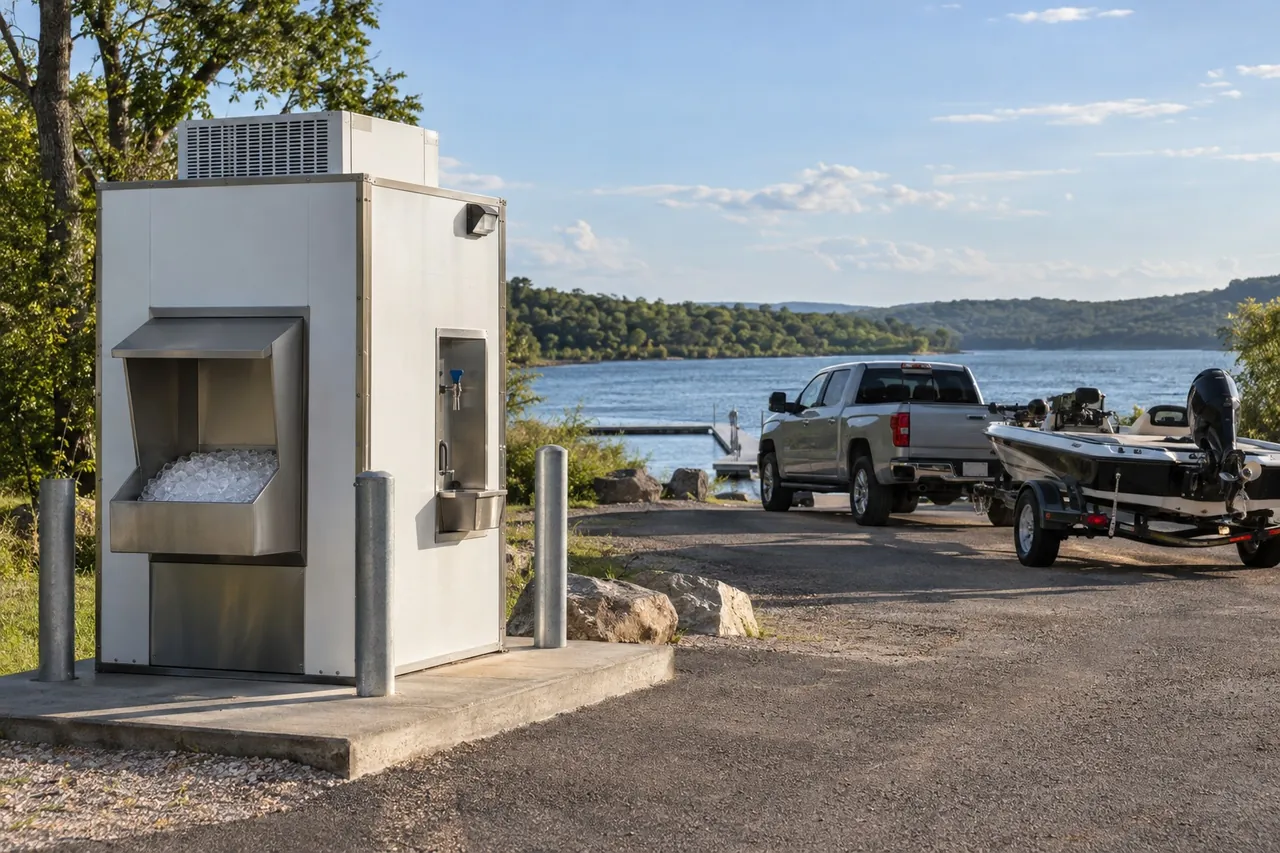
An ice vending machine business owns and runs self-serve kiosks that make ice on site and sell it to the public, usually 24 hours a day. A customer pays by card, coin or app and the machine drops a bag of ice or fills the customer's own cooler with bulk ice. Many units also sell purified drinking water by the gallon, which is why the format is often called an ice and water vending machine.
The appeal is simple: ice is a staple with steady demand, the kiosk needs no staff at the counter, and ice made on site from municipal water costs far less than bagged ice delivered by truck. The risks are equally simple: a poor location, a machine sized wrongly for demand, and maintenance that is skipped.
There is a second way into the ice business: produce ice with commercial machines, bag it and sell it through freezers in shops, fuel stations and marinas. Be There does not build vending kiosks. We supply the commercial ice machines, bins and ice merchandisers that bagged ice producers use, so this guide covers both routes honestly.
Figures below are typical US market values in 2025–2026 from operator and industry reporting; check local prices, wages and rules before you commit.
How do ice making vending machines work?
Ice making vending machines are compact ice plants in a weatherproof cabinet. A typical commercial ice vending machine has five systems:
- Water treatment: sediment filter, water softener and carbon filter for ice; reverse osmosis and UV sterilisation for the water vend station.
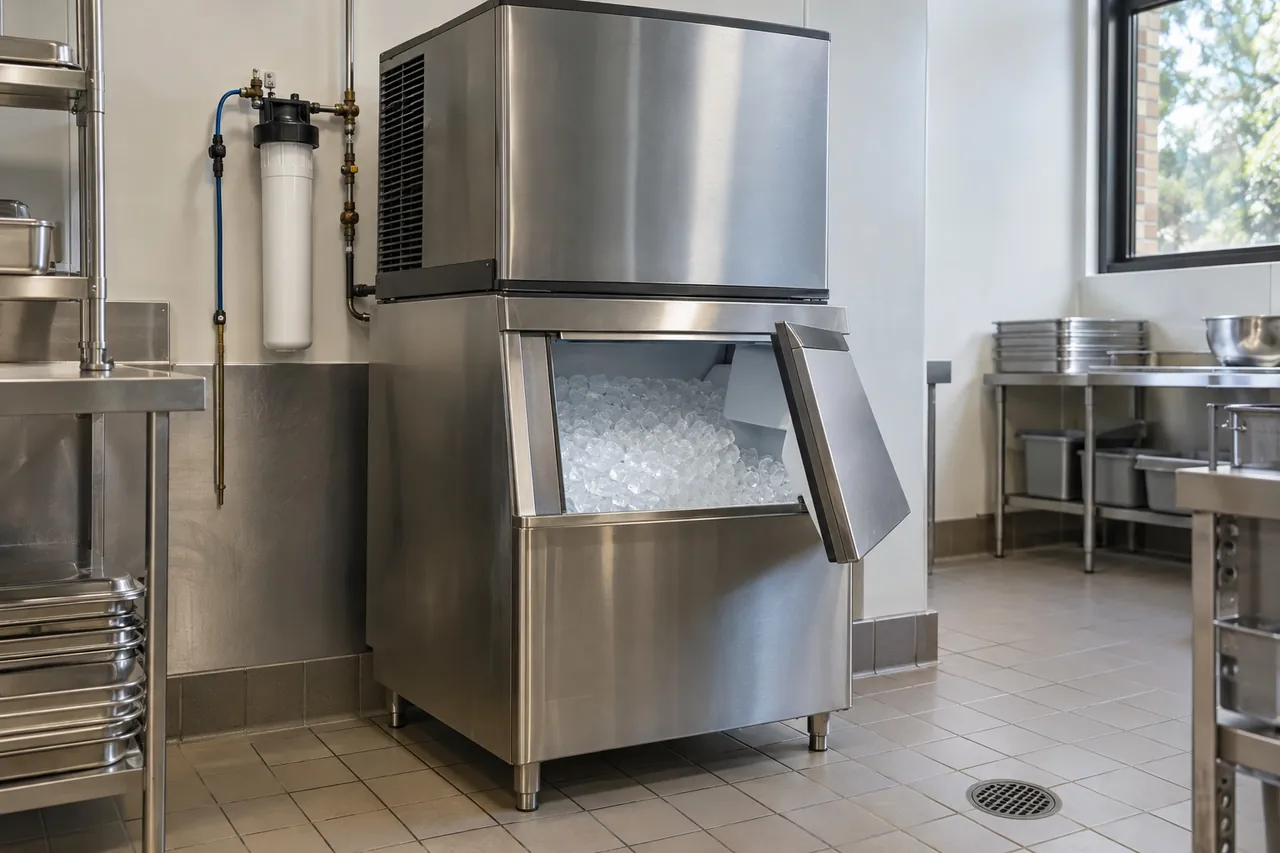
- Ice production: one or more commercial cube ice machine heads, usually on the roof of the bin, with air-cooled condensers.
- Storage: a large insulated bin that builds stock overnight for daytime peaks.
- Delivery: an auger or conveyor that feeds either an automatic bagger (bags of about 7–20 lb, 3–9 kg) or a bulk chute for customer coolers.
- Payment and control: card reader, coin and note acceptors, and usually remote monitoring of sales, bin level and faults.
Production varies with the number of ice heads. Smaller kiosks commonly make about 450–1,000 kg (1,000–2,200 lb) a day; larger double-head units make several tonnes. Like any air-cooled ice machine, output falls in hot weather, which is also when demand peaks, so size for summer conditions.
Water vending
A water vending machine sells purified water into customers' own bottles. It needs reverse osmosis, storage, UV treatment and frequent filter changes. In many US states, water vending is separately licensed and inspected.
Four ways to run an ice business
Choose the model before you choose equipment.
| Model | Main equipment | Typical output | Labour | Best for |
|---|---|---|---|---|
| Standalone ice vending kiosk | All-in-one vending machine, pad, utilities | 450 kg (1,000 lb) to several tonnes a day | Low: cleaning, filters, cash, repairs | Busy roadside sites, marinas, campgrounds |
| Ice and water vending kiosk | As above plus RO water station | As above plus water by the gallon | Low–medium | Areas with poor tap water or high bottled water use |
| In-store bagged ice production | Ice machine, bin, bag sealer, merchandiser | 100–1,000 kg (220–2,200 lb) a day | Medium: staff bag the ice | Supermarkets, fuel stations, liquor stores |
| Ice plant with delivery | Modular ice machines, automatic bagger, cold store, truck | 1–20 t a day and up | High: production and delivery staff | Supplying stores, events, fisheries |
A stand alone ice machine business is the lowest-labour option but needs the right land and a large upfront payment. In-store production suits a retailer that already sells bagged ice and wants to stop paying for deliveries. An ice plant is an ice supply and manufacturing business that needs ice factory equipment: margins can be good, but trucks, staff and storage add cost and complexity.
How much does an ice vending machine cost?
The ice vending machine price depends on daily output, bagging, water vending and payment options. Typical US ranges reported in 2025–2026:
| Cost item | Typical range (USD) | Notes |
|---|---|---|
| New machine, smaller unit | About $20,000–50,000 | Single ice head, bulk and/or bag vend |
| New machine, high-capacity | $90,000 and up | Multiple heads, bagger, water vend |
| Used ice vending machine | About $10,000–50,000 | Depends on age, condition and refurbishment |
| Site preparation | About $1,000–5,000 | Concrete pad, electrical and water connections |
| Permits and licences | About $500–2,000 | Health, building, zoning, business licence |
| Bags, signage, card reader set-up | Varies | Often a few thousand dollars |
All-in, the ice vending machine business cost for a first site usually falls between about US$20,000 and US$150,000, depending mainly on machine size and whether it is new or used.
Running costs
Budget for electricity, water and sewer charges, softener salt, filters and UV lamps, bags, card processing fees, insurance, land lease or revenue share, and service. Large commercial ice machines typically use roughly 4–7 kWh of electricity per 100 lb (45 kg) of ice. Every 100 lb of ice contains 12 US gallons (45 L) of water, plus water used for purging and regenerating the softener.
Is an ice vending business profitable? A worked example
Profit depends on volume, price and location, so build your own numbers. Here is an illustrative example with stated assumptions, not a forecast:
- Average sales of 450 kg (1,000 lb) a day, sold as 100 bags of 10 lb (4.5 kg).
- Price of US$2.00 per 10 lb bag, within the typical US$1–3 range.
- Variable cost of about US$0.30 per bag for power, water, salt, filters and bags, close to figures operators report.
That gives about US$200 a day in sales and US$170 a day after variable costs, or roughly US$5,000 a month before lease, insurance, card fees, service and loan repayments. Operators commonly report payback in about three to four years at a reasonably good site; oversized machines and weak locations stretch that.
Seasonality and peaks
Ice sales are seasonal. In hot climates, summer weekends and holidays can sell several times a normal weekday, while winter sales may drop sharply in cooler regions. The bin builds stock overnight, so size storage for the busiest day, not the average. Remote monitoring of bin level helps you service the machine before it runs empty.
For a plain view of how output, storage and daily demand relate, see our ice machine capacity guide.
Where to put an ice vending machine: locations and permits
Location decides most of the result. Strong ice vending machine locations share a few traits:
- Traffic and visibility: on a main road, visible to drivers in both directions, near routes to beaches, lakes, parks or sports grounds.
- Easy access: room for pickups towing boats or trailers to pull in and out.
- Demand nearby: marinas, campgrounds, RV parks, fishing areas, construction sites, fuel stations, convenience stores and event venues.
- Utilities: potable water, a drain and the right electrical supply (many kiosks run on single-phase power; large units may need more).
- Safety: good lighting and cameras for 24/7 sales.
Most operators lease a small parcel or share revenue with a landowner. A concrete pad and utility connections should be done by licensed trades.
Permits and food safety
Ice is food. In the US, packaged ice is regulated as a food under FDA current good manufacturing practice rules, and state or local health departments usually permit and inspect ice vending and water vending machines. Expect a health permit, building permit for the pad, zoning approval and a business licence. Rules differ by state and country, so confirm them before signing a lease.
Starting a bagged ice business with commercial ice machines
If you do not want a kiosk, you can make and bag ice yourself. This is the route Be There equipment serves.
Equipment list
- Ice machines: modular cube ice heads on storage bins. Be There ice machines run from 25 kg (55 lb) to 20 t a day; cube models make 50–1,000 kg (100–2,200 lb) per unit, and several heads can work side by side.
- Ice bagging equipment: a manual bag-and-seal station for small volumes, a semi-automatic ice bagging machine with a heat sealer, or an automatic ice bagging machine that weighs, fills and seals.
- Cold storage: a freezer room or walk-in to hold stock between production and sale.
- Point of sale: lockable ice merchandisers holding −12 °C to −6 °C (10–21 °F) indoors or outdoors.
| Ice made per day | 10 lb (4.5 kg) bags per day | Typical bagging setup |
|---|---|---|
| 500 kg (1,100 lb) | About 110 | Manual bag and seal |
| 1,000 kg (2,200 lb) | About 220 | Semi-automatic bagger |
| 2,000 kg (4,400 lb) | About 440 | Semi-automatic or automatic bagging system |
| 5,000 kg (11,000 lb) | About 1,100 | Automatic ice bagging system |
For merchandiser sizing, defrost type and outdoor ratings, read the bagged ice merchandiser buying guide.
Used machines, franchises and ice businesses for sale
Used ice vending machines for sale can halve the upfront cost, but check them as you would any used refrigeration equipment:
- Age, compressor condition and refrigerant type; some older refrigerants are being phased out.
- Scale in the evaporators and water system, and the state of the softener and filters.
- Rust in the cabinet and bin, and the condition of the insulation and door seals.
- Whether the payment system still accepts current cards and mobile payments.
- Service history and parts availability.
An ice vending machine franchise usually provides the machine, training, branding and sometimes site selection, in return for upfront and ongoing fees. Compare the total cost with buying equipment directly and running it under your own name.
When you look at an ice vending business for sale or an ice machine business for sale, ask for at least two years of monthly sales, utility bills and repair invoices, plus the land lease terms and how long they run.
Italian water ice is a different business
An italian water ice business sells a frozen dessert, not bagged ice. It needs batch freezers and dipping cabinets rather than ice machines; see Be There ice cream and Italian ice equipment.
How to start an ice machine business: checklist
- Pick the model: vending kiosk, ice and water kiosk, in-store bagging or ice plant.
- Test demand: count nearby buyers, check competing ice prices and note seasonal peaks.
- Secure the site: lease, visibility, access, water, drain and power.
- Confirm permits: health, building, zoning, water vending and business licences.
- Size equipment for summer peaks, with storage for the busiest day.
- Write an ice vending business plan with capital cost, variable cost per bag, fixed costs, price and break-even volume.
- Plan maintenance: weekly cleaning, softener salt, filter changes and descaling.
If you are importing equipment, our checklist for importing refrigeration equipment from China covers voltage, certification and inspection. Be There supplies commercial ice machines and ice merchandisers for bagged ice businesses, quoted FOB, CIF or DDP. Send your daily output target, bag size, power supply and destination through the quotation form and we will reply within one working day.