Short answer
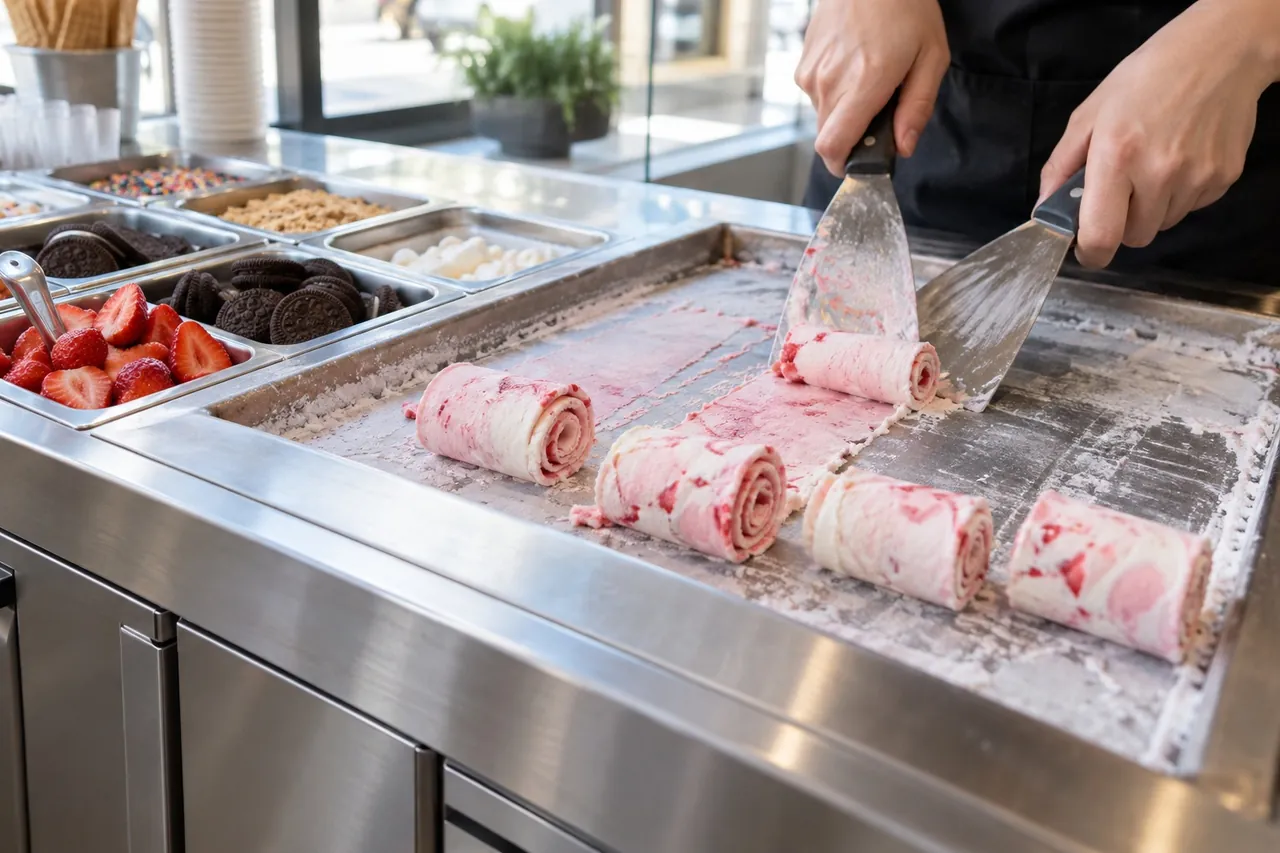
A rolled ice cream maker is a refrigerated stainless steel pan, chilled by a built-in compressor to about −25 °C to −35 °C (−13 °F to −31 °F). Liquid base of about 150–200 ml is poured on, mixed with toppings, spread about 3 mm thin and scraped into rolls in 2–3 minutes. One commercial pan typically serves 15–25 cups per hour.
Key takeaways
- Commercial rolled ice cream machines use a compressor under the pan to hold the plate at about −25 °C to −35 °C (−13 °F to −31 °F).
- Each serving takes about 2–3 minutes, so one pan realistically produces 15–25 cups per hour with one trained operator.
- Most single-pan machines run on 220–240 V single-phase power and draw roughly 0.8–1.5 kW; double-pan models draw more.
- Home rolled ice cream makers use a pre-frozen plate that warms after one or two batches and cannot support continuous service.
- Keep the liquid base below +5 °C (41 °F), use a pasteurised mix and clean the pan between allergen flavours.
What is a rolled ice cream maker?
A rolled ice cream maker is a refrigerated flat pan, usually food-grade stainless steel, that freezes a thin layer of liquid ice cream base in seconds so it can be scraped into tight rolls. The style comes from Thailand, where it is called stir-fried ice cream, which is why the equipment is also sold as a fried ice cream pan, an ice cream roller machine or a Thai ice cream maker.
Commercial units look like a small counter or cart. A compressor and condenser sit in the cabinet underneath, and refrigerant evaporates in coils bonded to the underside of the pan. That direct cooling pulls the plate down to about −25 °C to −35 °C (−13 °F to −31 °F), far colder than a display freezer, because the base must freeze in under a minute rather than in a churned barrel.
Unlike a soft serve machine or a batch freezer, a rolled ice cream machine does not whip air into the product. The result is dense, with very low overrun, and every portion is made in front of the customer. That theatre is the main selling point: the equipment is as much a show counter as a freezer.
The full range of rolled ice cream equipment usually includes the cold pan itself, chilled topping wells, two flat steel spatulas, a refrigerated store for the base and somewhere to hold finished cups for a few minutes.
How does an ice cream roller machine work?
The process is the same on every machine, from a single-pan cart to a four-pan shop counter.
- Pre-cool the pan. A commercial pan reaches working temperature in roughly 5–15 minutes from switch-on, depending on pan size and room temperature.
- Pour the base. About 150–200 ml (5–7 fl oz) of chilled liquid mix goes onto the plate.
- Chop in toppings. Fruit, cookies or sauces are chopped into the freezing base with the spatula edges for 30–60 seconds.
- Spread thin. The mix is spread into a rectangle about 3 mm (1/8 in) thick and left a few seconds to set.
- Roll. The operator pushes the spatula at a shallow angle so each strip curls into a roll, typically 5–6 rolls per cup.
The thinner and more even the layer, the cleaner the rolls. A base with too little sugar or solids freezes brittle and cracks; one with too much sugar stays sticky. Most operators settle on a mix with about 14–18% sugar and use the same pasteurised liquid mix they would put in a soft serve machine, which keeps the recipe consistent.
Heat load matters. Every pour of warm base and every scrape warms the plate, so a pan that holds −30 °C (−22 °F) at idle may climb towards −20 °C (−4 °F) during a rush. Compressor size relative to pan area decides how fast it recovers, and that recovery time is what limits output per hour.
Commercial rolled ice cream machine vs a machine for home
Searches for a rolled ice cream machine for home mostly return small trays that you put in the household freezer overnight. They work for a party, but the stored cold is gone after one or two portions and the plate must go back into the freezer for hours. A business needs a compressor-driven pan that keeps pulling heat out all day.
| Feature | Home pre-frozen tray | Commercial rolled ice cream machine |
|---|---|---|
| Cooling | Stored cold (gel or metal block) | Built-in compressor, continuous |
| Plate temperature | About −15 °C to −20 °C (5 °F to −4 °F), rising quickly | About −25 °C to −35 °C (−13 °F to −31 °F), held |
| Pan size | About 20–25 cm (8–10 in) | About 35–50 cm round or 50 × 50 cm (14–20 in) square |
| Servings before recovery | 1–2, then re-freeze for hours | 15–25 per hour per pan |
| Power | None | Typically 220–240 V, about 0.8–1.5 kW per pan |
| Build | Plastic housing | Stainless steel pan and cabinet, castors |
If you only want to test the concept at a weekend market, a home tray will tell you whether customers like the product but not whether you can serve a queue. Any serious trial of rolled ice cream equipment should use a compressor machine.
How many servings per hour can a rolled ice cream table make?
Output is set by the operator and the pan recovery, not by a rated litres-per-hour figure. In practice one trained person on one pan produces a cup every 2–4 minutes once you include taking the order, cleaning the plate and adding toppings. Plan on 15–25 servings per pan per hour.
| Configuration | Typical use | Realistic output | Staff at peak |
|---|---|---|---|
| Single round pan cart | Markets, events, food courts | 15–25 cups/h | 1 |
| Double pan | Small shop or kiosk | 30–50 cups/h | 2 |
| Square pan with 6–10 topping wells | Shop counter | 20–30 cups/h per pan | 1 per pan |
| Three or four pans | Busy mall store | 60–100 cups/h | 3–4 |
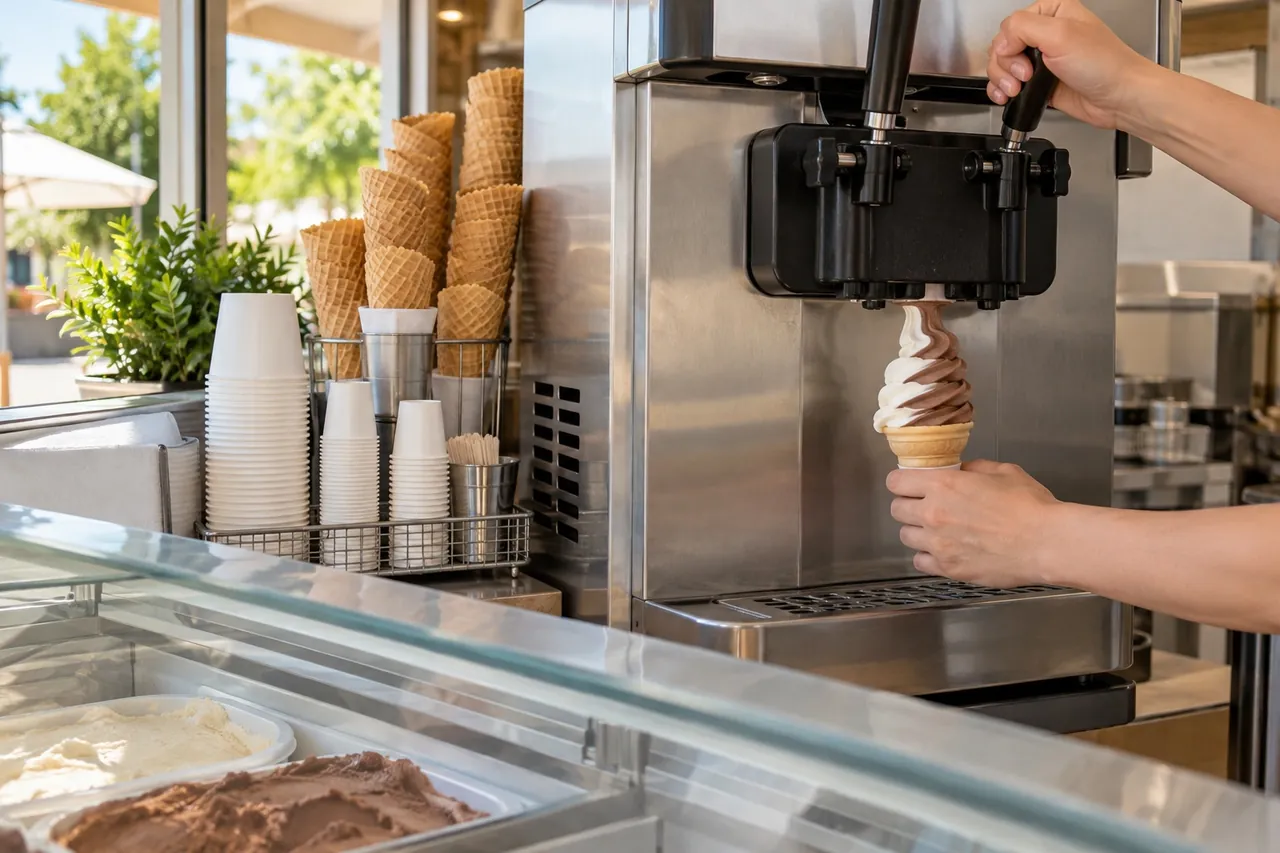
A rolled ice cream table with refrigerated topping wells saves time because cut fruit and sauces sit at +2 °C to +8 °C (36–46 °F) within reach. Count your expected peak hour, divide by about 20, and that is the number of pans and operators you need. Rolled ice cream is slower than soft serve, which can deliver 200–250 servings per hour from a single tabletop machine, so many shops pair the two.
What to check before buying rolled ice cream equipment
When you compare a commercial rolled ice cream machine for sale, ask for these points in writing rather than relying on a photo.
- Pan temperature under load. Ask for the plate temperature at idle and after 10 consecutive servings at your room temperature. A good machine holds below about −25 °C (−13 °F).
- Pan material and thickness. Food-grade 304 stainless steel, with a flat surface that does not dish when the spatula is pressed.
- Refrigerant and compressor. Check which refrigerant is allowed in your market (R290 and R404A rules differ by country) and that the compressor is sized for the pan area.
- Climate class. If you trade outdoors or in a hot mall, confirm the machine is rated for ambient temperatures up to 38–43 °C (100–109 °F).
- Defrost and drainage. A defrost switch and a drain make end-of-day cleaning far faster.
- Power. Voltage and frequency must match your site: 220–240 V/50 Hz, 220 V/60 Hz or 110–120 V/60 Hz.
- Certification. CE for Europe, UL/ETL and NSF for many US inspectors, or the local mark your health department requires.
Our checklist on importing refrigeration equipment from China covers voltage, refrigerant, certificates and run tests in more detail.
Base mix, hygiene and food safety
Rolled ice cream is a ready-to-eat dairy product, so health inspectors treat it like any other ice cream. Use a pasteurised liquid base, either a commercial mix or your own recipe pasteurised in a batch pasteuriser, and keep it at or below +5 °C (41 °F) until it is poured. Never top up an open jug left on the counter.
Fresh fruit and chopped toppings should be held cold in covered wells and discarded at the end of the shift. Because each cup is made on one shared plate, allergens are the biggest risk: nut, peanut and gluten toppings can transfer to the next order. Scrape and wipe the plate between orders, and sanitise it fully before making an allergen-free serving.
At the end of the day, switch to defrost, let the ice melt to the drain, clean the plate and spatulas with a food-safe detergent, rinse, sanitise and leave them to air-dry. Wipe the condenser grille weekly in a kitchen and more often at outdoor events where dust builds up, because a blocked condenser is the most common reason a pan stops reaching temperature.
How much does a rolled ice cream maker cost to run?
Machine prices vary widely by pan count, compressor, finish and certification, and by the market you import into. As a rough guide, single-pan commercial units sit at the lower end of the range and double or multi-pan counters with topping wells cost several times more. Always compare quotes on the same Incoterm, FOB, CIF or DDP, because freight and duty can change the landed cost by a large margin.
Running costs are modest. A single pan drawing about 1 kW for a 10-hour trading day uses around 10 kWh, though the compressor cycles so real use is usually lower. The bigger costs are labour, because each cup needs an operator, and ingredients: roughly 150–200 ml of base plus toppings per cup.
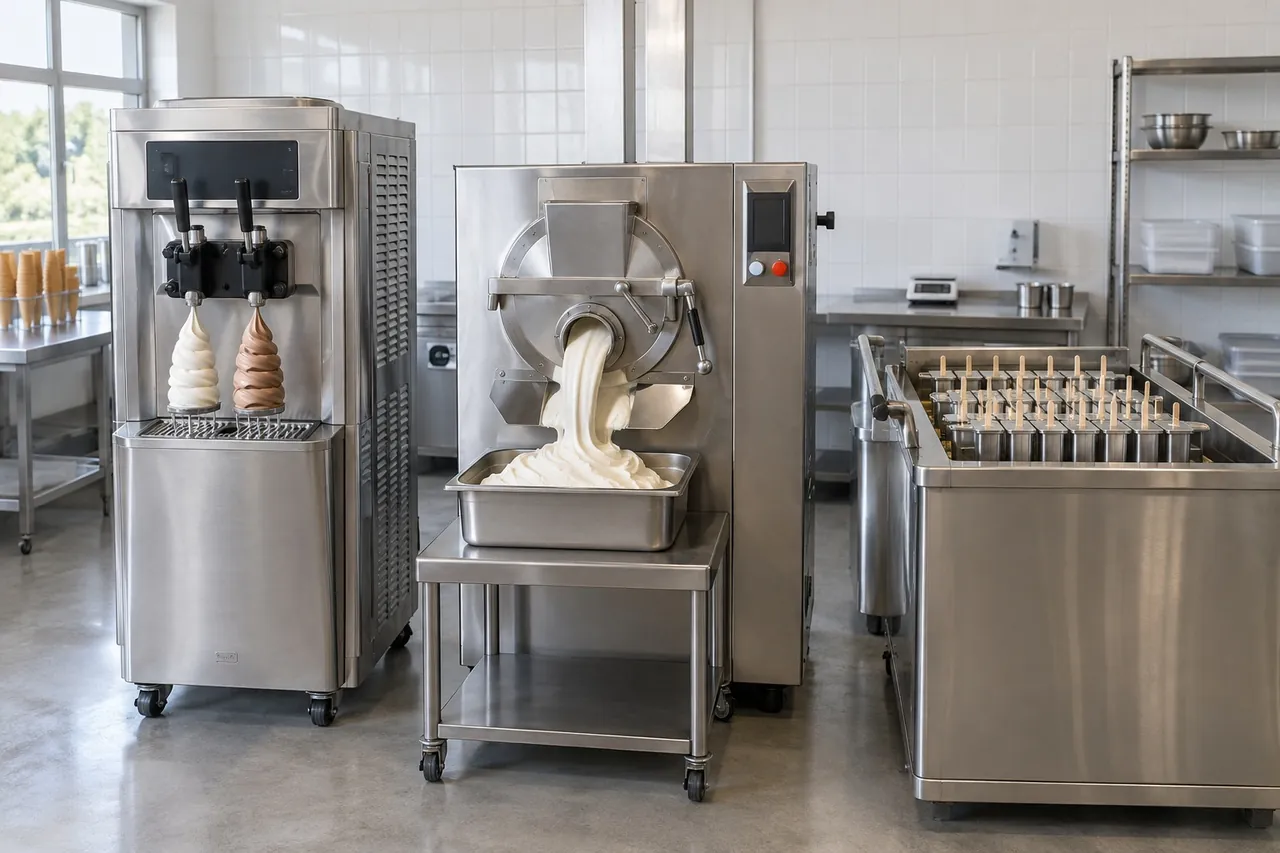
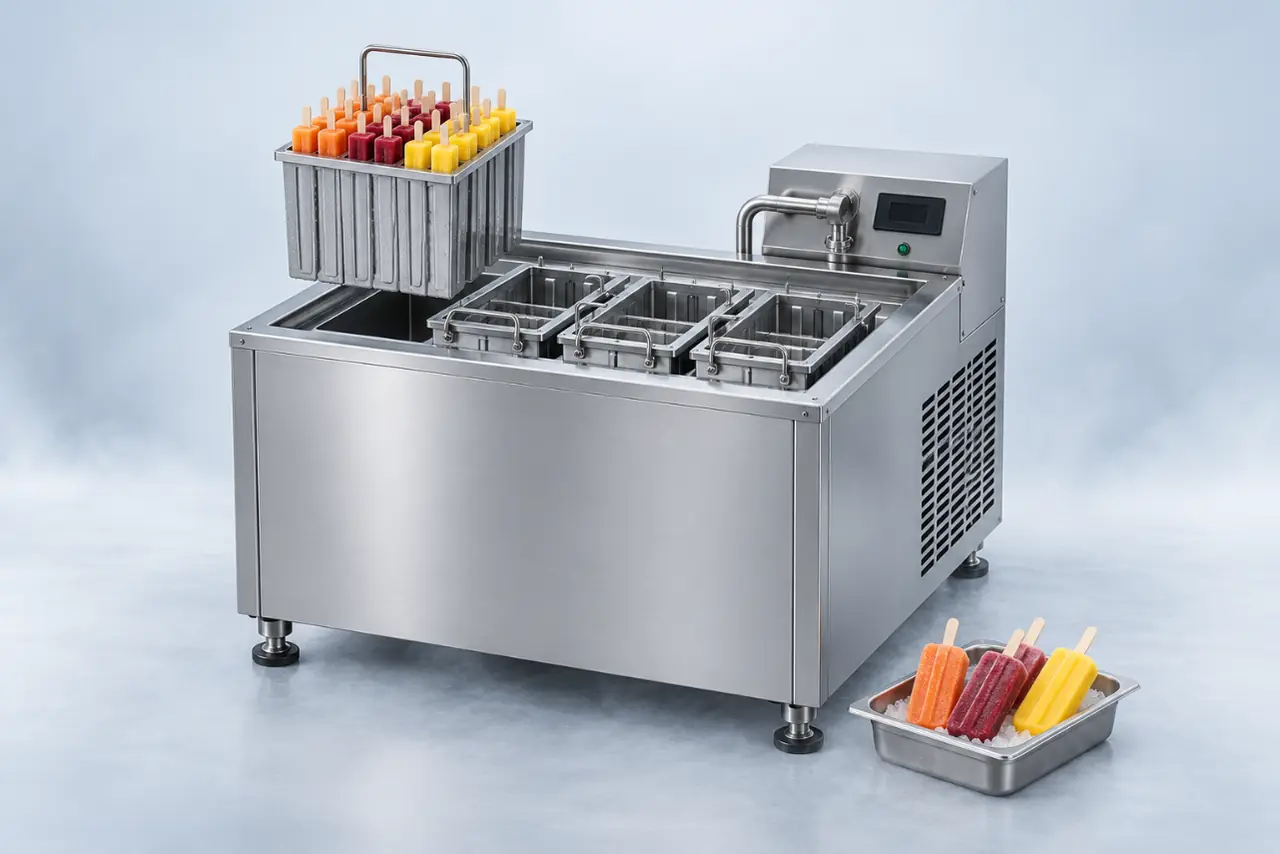
Because output per staff hour is low, rolled ice cream works best where customers pay a premium for the show: tourist streets, malls and events. A business planning high volume often adds a soft serve or frozen yogurt machine for speed, or a popsicle machine from our ice cream machine range for grab-and-go stock, and keeps the rolled pan as the visual draw.
How to choose: checklist and next steps
Use this short checklist before you order:
- Estimate your peak-hour demand and divide by about 20 to get the number of pans and staff.
- Decide between a round pan cart for events and a square pan counter with topping wells for a shop.
- Confirm power supply, ambient rating and the certificate your local inspector expects.
- Plan base supply and cold storage, including a fridge for mix and a display freezer for any packed product.
- Budget for staff training: rolling cleanly takes practice.
Be There's ice cream lines are soft serve and frozen yogurt machines, batch freezers for hard ice cream and gelato, and brine-tank popsicle machines; fried ice cream pans are not part of our standard catalogue. If you are building a dessert shop around rolled ice cream, see our commercial ice cream machines for the rest of the line-up and the guide to commercial ice cream machine types, then send us your shop plan for a quotation. We reply within one working day and can tell you what we can supply against your spec.