Short answer
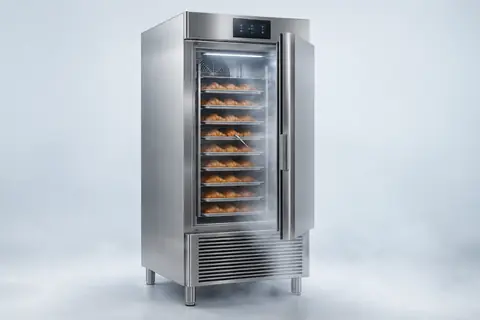
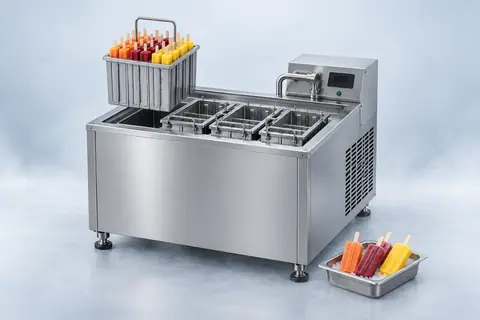
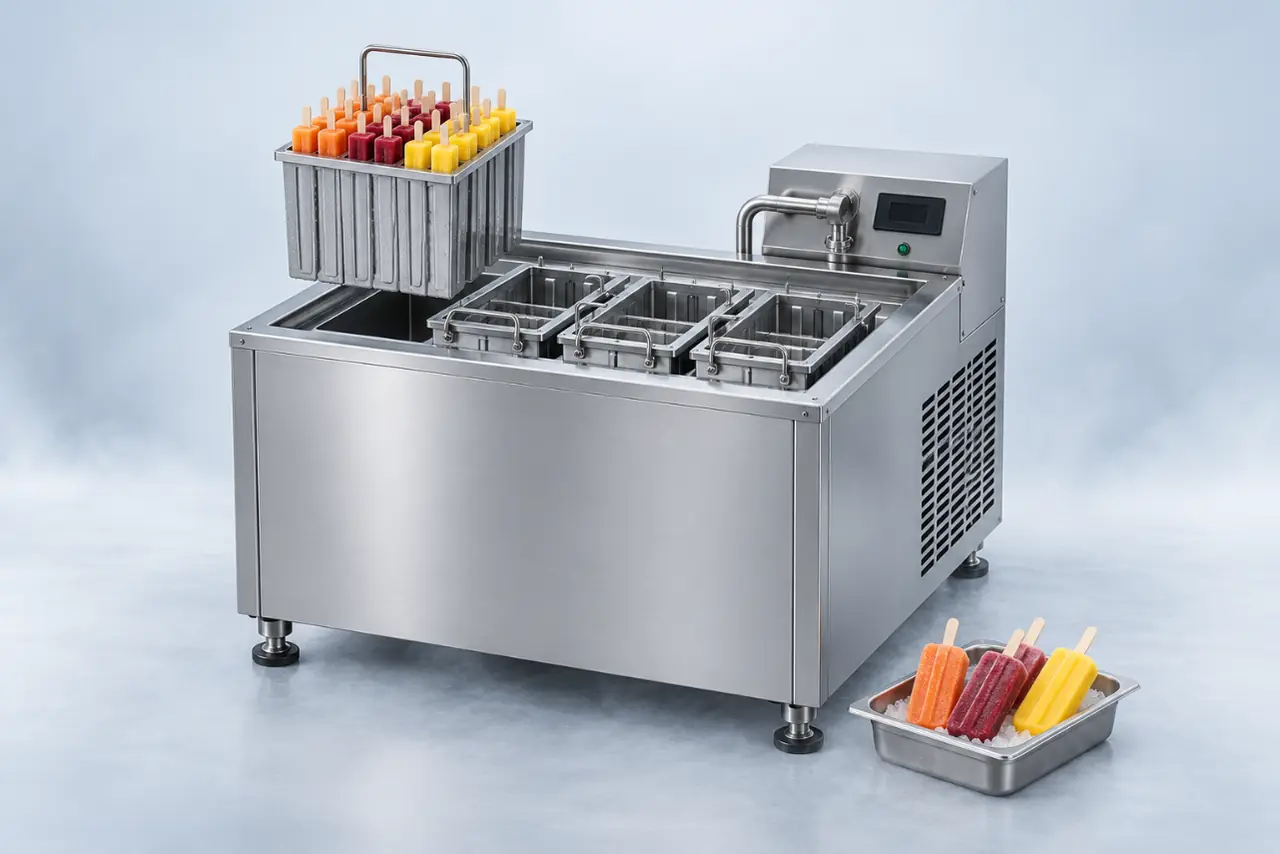
A brine-tank popsicle machine freezes 40-stick molds in about 15–25 minutes, so plan on 100–150 popsicles per mold per hour. A small shop starts with a 1–2 mold machine; a small factory uses 4–8 molds plus a mixing tank, pasteuriser, hardening freezer and bag sealer.
Machine output
| Machine | Per hour | Per 8-hour day | Suits |
|---|---|---|---|
| 1 mold | 100–150 | 800–1,200 | Shop, kiosk, test market |
| 2 molds | 200–300 | 1,600–2,400 | Busy shop, café chain |
| 4 molds | 400–600 | 3,200–4,800 | Small factory, wholesale |
| 8 molds | 800–1,200 | 6,400–9,600 | Regional brand |
What else the line needs
- Mixing tank and, for dairy recipes, a pasteuriser and ageing tank.
- Stick holders and sticks.
- Demoulding tank (warm water dip).
- Packing table and bag sealer.
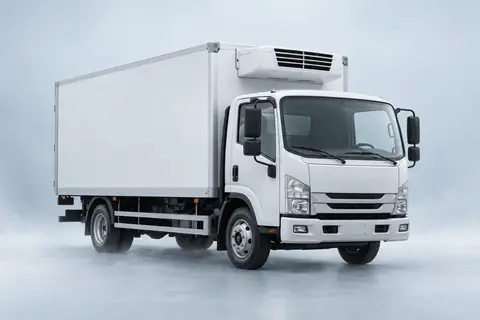
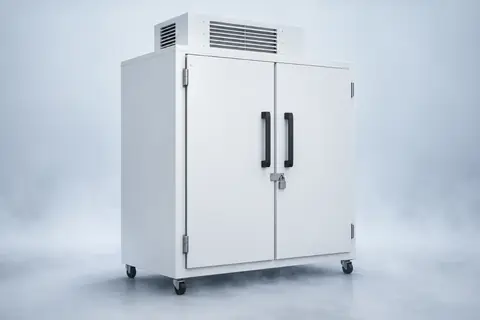
- Hardening freezer or cold room at −18 °C to −25 °C.
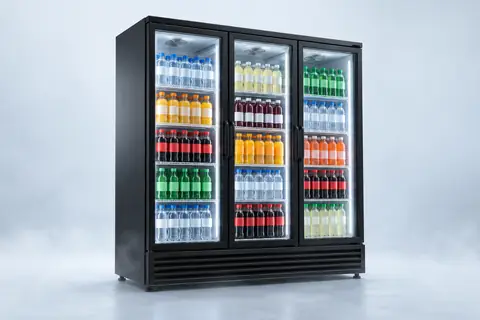
- Display freezers for retail.
Recipe tips
Water-based fruit pops freeze faster than creamy ones. Sugar content controls hardness: too little gives icy, hard pops; too much stops them freezing properly. Fruit pieces and layered colours work well in brine machines because molds freeze from the outside in.
Hygiene and approvals
Use food-grade SUS304 molds and tanks, keep brine separate from product, and check local food business approvals before selling wholesale.
See our commercial popsicle machines and display freezers.
Quick answers
How many popsicles can one mold make per day?
About 100–150 per hour, so roughly 800–1,200 in an 8-hour production day per mold.
Brine machine or blast freezer for popsicles?
Brine machines freeze molds much faster and are the standard for stick ice lollies. Blast freezers suit small trial batches.
What molds should I start with?
Classic flat stick molds for core products, plus one shaped mold for a signature line. Custom molds take about 2–3 weeks.
Do popsicles need a hardening freezer?
Yes. After demoulding and bagging, store at about −18 °C to −25 °C before sale.