Short answer
An open air cooler is a refrigerated display case with no doors: a curtain of cold air, blown from the top and drawn back at the base, holds packaged food at about 0 °C to +5 °C (32–41 °F). Most are 0.8–1.1 m (31–43 in) deep and sold in 1.25–3.75 m runs. They sell faster but use far more energy than glass door merchandisers.
Key takeaways
- An open air cooler holds product at roughly 0 °C to +5 °C (32–41 °F) using an air curtain instead of doors.
- ISO 23953 rates cases by product temperature class (M1 = −1 °C to +5 °C) and test-room climate class (class 3 = 25 °C, 60% RH).
- Open multideck depth is typically 0.8–1.1 m (31–43 in) and heights run about 1.9–2.2 m (75–87 in).
- Glass door merchandiser refrigerators lose far less cold air, so they usually cost much less to run per metre of display.
- Open cases work best in air-conditioned stores below about 25 °C (77 °F) and 60% relative humidity, away from doors and HVAC drafts.
What is an open air cooler?
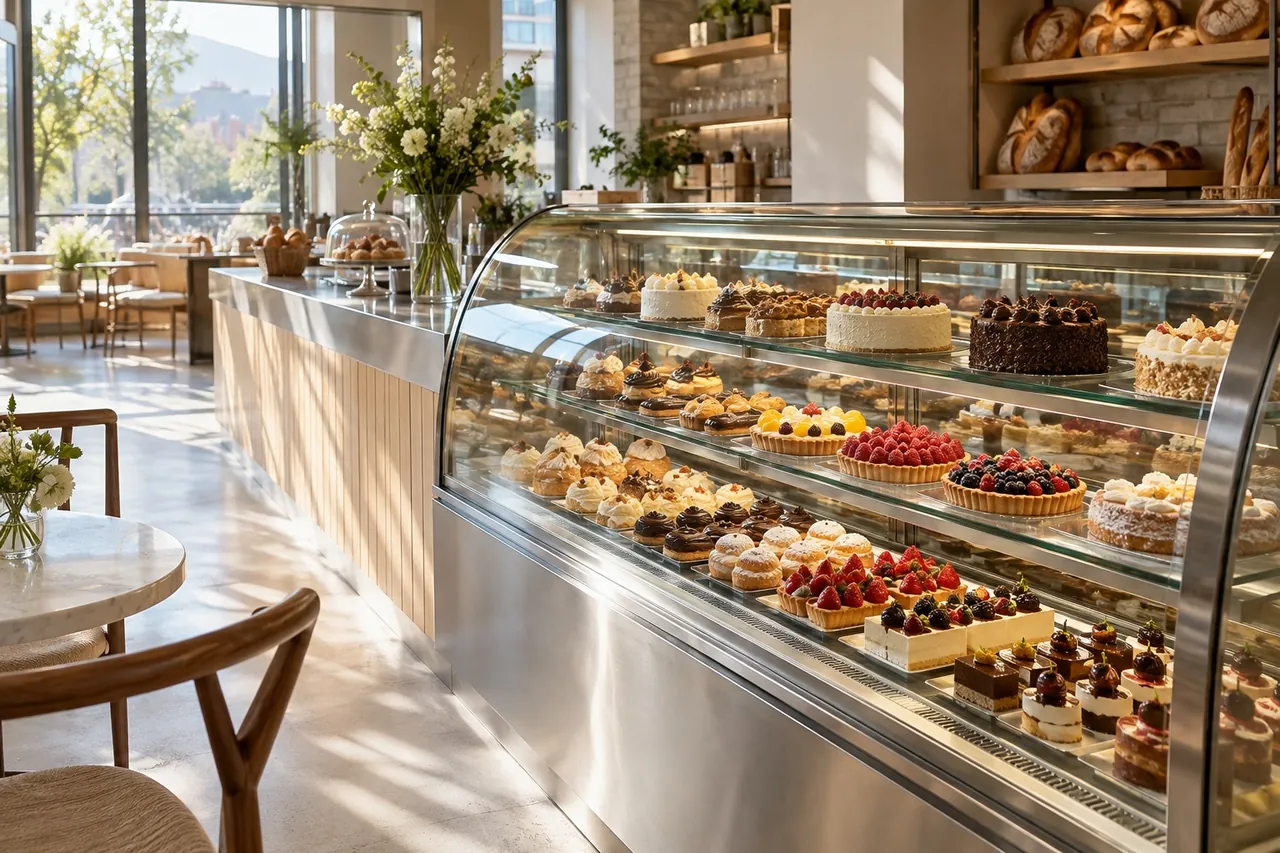
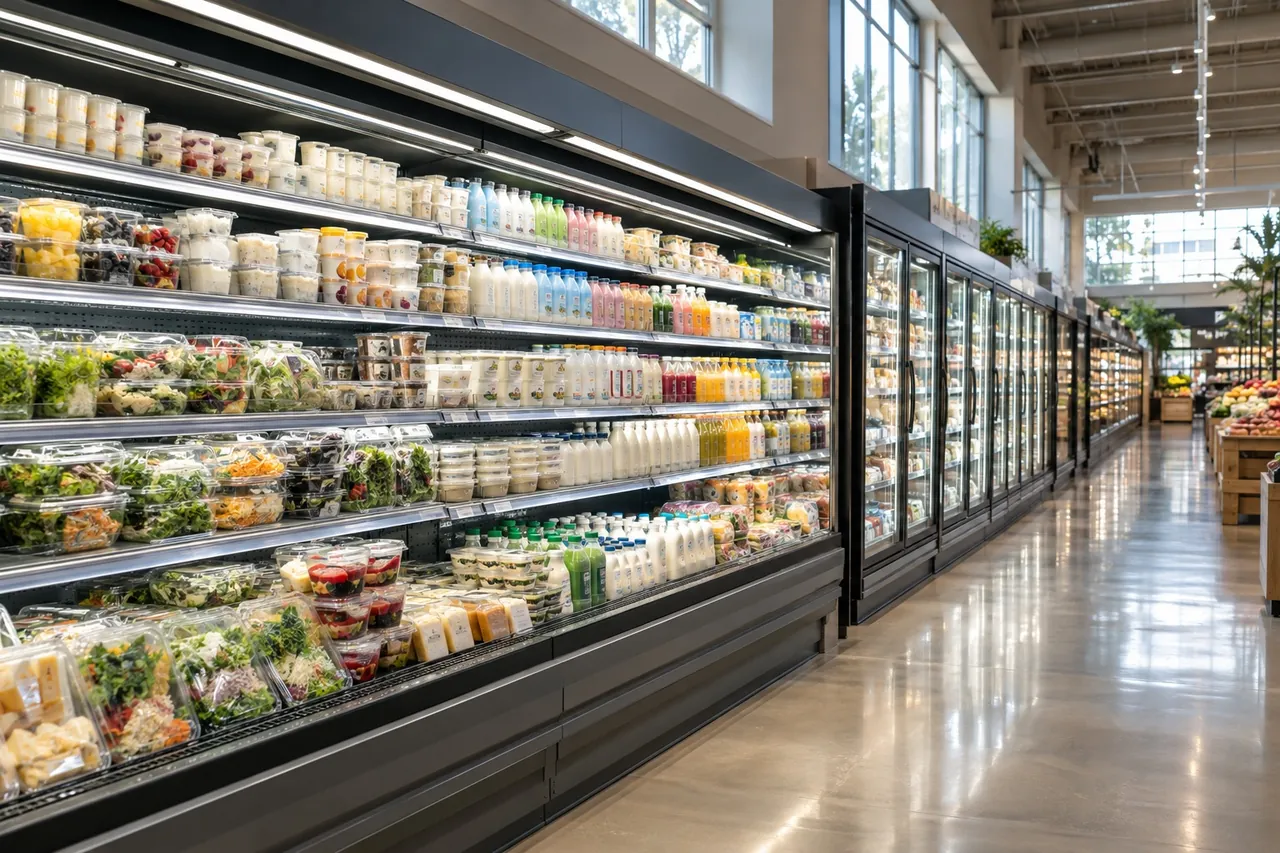
An open air cooler (also called an open refrigerator, open display cooler or open-front multideck) is a retail refrigerator with no doors. Cold air leaves a grille at the top front of the case, falls across the opening as an air curtain and is pulled back into a return grille at the base, so shoppers can take product without opening anything.
That curtain holds packaged dairy, drinks, salads, sandwiches, meat and produce at roughly 0 °C to +5 °C (32–41 °F). The evaporator coil and fans sit in the base or back panel; the compressor is either built in (plug-in) or remote, connected to a store's central rack.
Open air coolers are the default in supermarket refrigeration for one reason: they sell more. With no door to open, impulse buying rises and the whole range is visible at once. The trade-off is energy and temperature stability. Warm store air mixes with the curtain all day, so the case works harder than a glass door merchandiser refrigerator of the same length, and it is sensitive to drafts, sunlight and humidity.
This guide covers the main case types, how temperature and climate classes are rated, how open and glass-door units compare, and what to check before you buy grocery store coolers or a single grab and go fridge for a café or office.
Types of open display cooler: multideck, grab-and-go, produce and island cases
“Open air fridge” covers several case styles. Pick the one that matches your product, floor space and store layout.
| Case type | Typical size | Typical temperature | Best for |
|---|---|---|---|
| Tall open multideck | 1.9–2.2 m (75–87 in) high, 0.8–1.1 m (31–43 in) deep, 1.25–3.75 m runs | 0 °C to +5 °C (32–41 °F) | Dairy, drinks, deli, packaged meat in supermarkets |
| Low / mid-height multideck | 1.3–1.6 m (51–63 in) high | 0 °C to +5 °C | Convenience store coolers, island ends, sightlines |
| Grab and go cooler (slim) | 0.6–1.5 m wide, 0.5–0.8 m deep | +1 °C to +5 °C (34–41 °F) | Sandwiches, salads, drinks in cafés, canteens, offices |
| Produce case | Low tiered or multideck, often with misting | +2 °C to +8 °C (36–46 °F), high humidity | Fruit, vegetables, cut flowers |
| Countertop merchandiser refrigerator | 0.4–1.0 m wide | +2 °C to +8 °C | Point-of-sale drinks and snacks |
| Island freezer / top open refrigerator | Chest or tub style, 1.5–2.5 m long | Freezer −18 °C to −24 °C (0 °F to −11 °F); chiller 0 °C to +5 °C | Frozen food, ice cream, promotions |
A produce cooler runs warmer and wetter than a dairy case, because many fruits and vegetables suffer chill injury or dry out below about +4 °C. A top open refrigerator or island freezer loses less cold than a vertical open case, because cold air is heavy and pools in the well. For frozen food on a budget, a glass-top chest such as our display freezers keeps that advantage with a lid on top.
What temperature does an open refrigerator hold? ISO 23953 classes explained
Retail display cases sold in Europe and many export markets are tested to EN/ISO 23953. The rating combines two codes: the product temperature class (how cold the warmest and coldest test packs stay) and the climate class (the test room the case was run in). A label such as “M1, climate class 3” is the quickest way to compare two open coolers.
| Product class | Test-pack range | Typical use |
|---|---|---|
| M0 | −1 °C to +4 °C (30–39 °F) | Fresh meat, fish |
| M1 | −1 °C to +5 °C (30–41 °F) | Dairy, deli, ready meals |
| M2 | −1 °C to +7 °C (30–45 °F) | Drinks, some packaged goods |
| H1 | +1 °C to +10 °C (34–50 °F) | Produce, drinks |
| L1 | −18 °C to −15 °C (0 °F to 5 °F) or colder | Frozen food, ice cream |
Climate class matters as much as the product class. Class 3 means 25 °C (77 °F) and 60% relative humidity; class 4 means 30 °C (86 °F) and 55%. An open case rated at class 3 will usually run warm, frost up and use more energy in a hot, humid shop. In tropical markets or stores without good air conditioning, ask for class 4 or 5 ratings, or choose doors.
For food safety, US operators also have to meet the FDA Food Code limit of 41 °F (5 °C) or below for cold-held TCS food, and many retailers set chilled cases to +3 °C (37 °F) to keep a margin. Probe products, not just the air, when you commission a case.
Open air cooler vs glass door merchandiser refrigerator
The decision most buyers face is open front or doors. A glass door merchandiser refrigerator keeps the cold inside; an open air display cooler accepts losses to sell faster.
| Factor | Open air cooler | Glass door merchandiser |
|---|---|---|
| Shopper access | Instant, best for impulse and fast-moving lines | One extra step; doors can deter some shoppers |
| Energy use | High; warm-air mixing at the curtain | Much lower per metre of display |
| Temperature stability | Sensitive to drafts, humidity, overloading | Stable; recovers quickly after door openings |
| Store comfort | Cold aisles, often need extra heating | Little effect on aisle temperature |
| Refrigeration | Often remote rack in supermarkets | Usually plug-in, fan-cooled |
| Typical sizes | 1.25–3.75 m modules | Single door merchandiser refrigerator to 4 doors |
Field studies of retrofitting doors to open multidecks typically report cutting the case's refrigeration energy by a third or more, which is why many grocery chains now put doors on dairy and drinks while keeping open cases for produce and food-to-go. The quoted saving depends on store climate, case age and how often doors open.
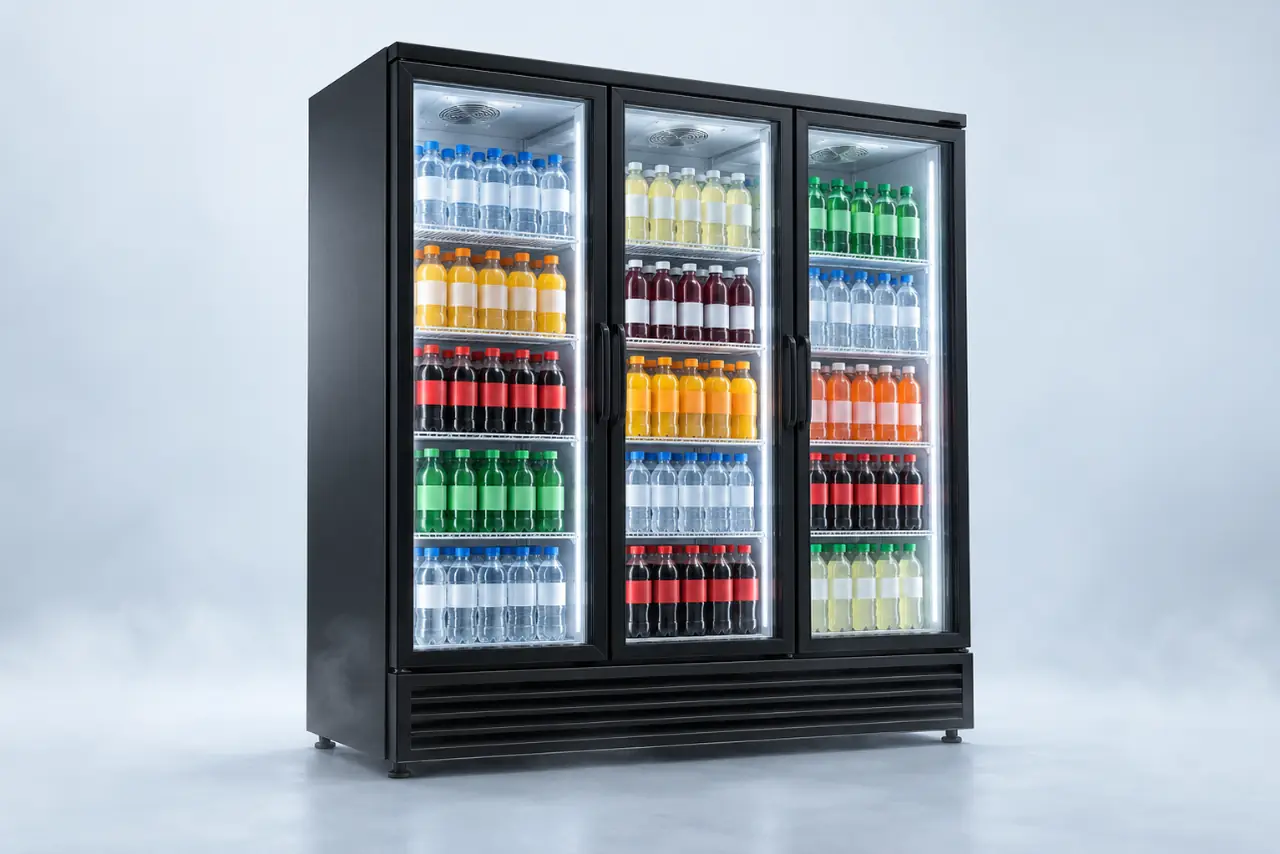
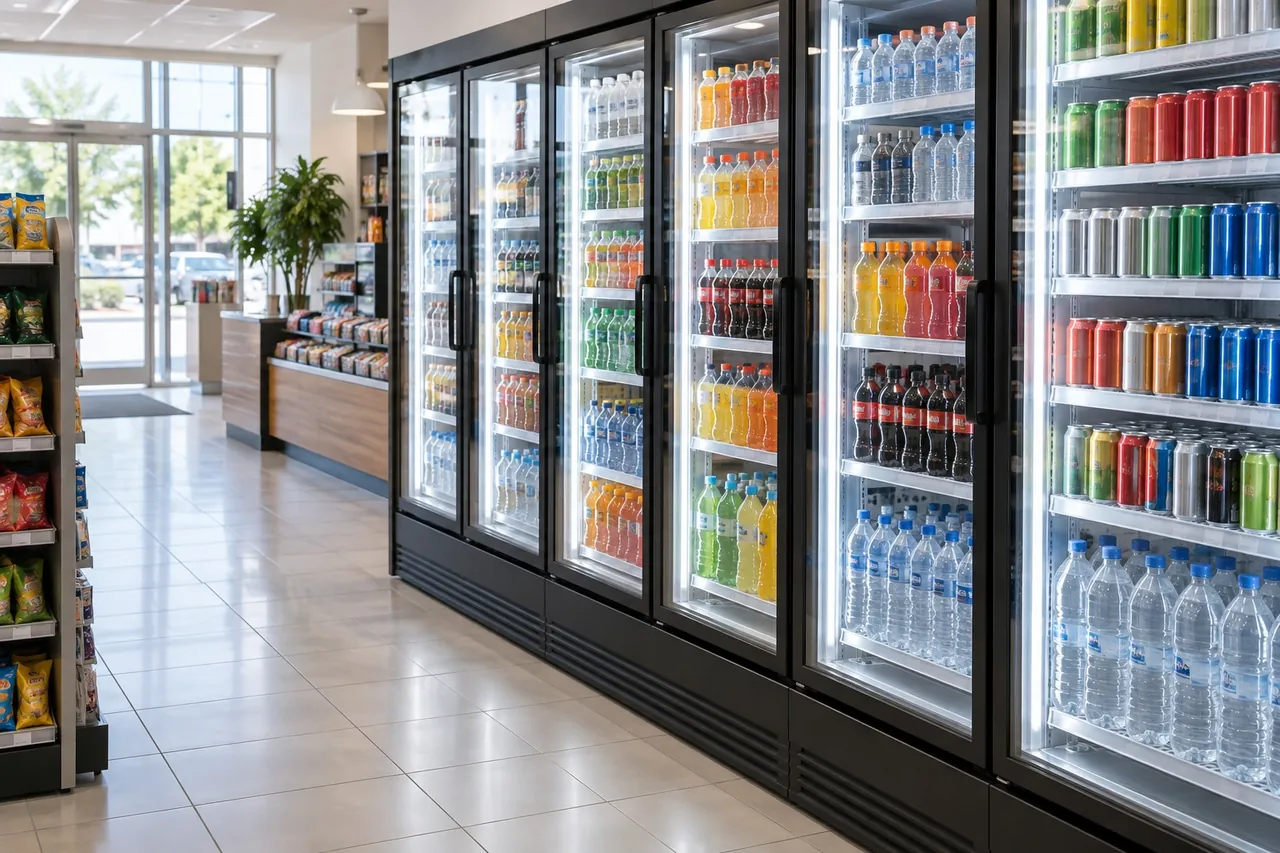
Doors come hinged or sliding. A sliding glass door merchandiser refrigerator needs no swing clearance, which suits narrow aisles; hinged doors seal better. For convenience store cooler doors, look for self-closing hinges, hold-open stops, heated or low-E glass to stop misting, and LED lighting in the frame. Our glass door display refrigerators come as single door, double door merchandiser refrigerator and 3 door merchandiser refrigerator models up to four doors.
Plug-in cases vs supermarket refrigeration rack systems
Every open or closed case needs a compressor somewhere. There are two ways to do it.
Plug-in (self-contained)
The compressor and condenser are built into the case. You plug it into a socket and it runs. Plug-ins suit convenience stores, cafés and small grocery store refrigeration projects because they are cheap to install and easy to move. The downside is that every case rejects its heat into the sales floor, so a row of plug-ins can overload the air conditioning, and each has its own compressor noise.
Remote and rack systems
A supermarket refrigeration rack system places several compressors on a common frame in a plant room or on the roof. Refrigerant pipes run to each case's evaporator, and the heat is rejected outdoors. Large grocery store refrigeration systems use racks because they are efficient at scale, keep heat and noise off the sales floor, and allow heat recovery. They need specialist design, refrigerant piping, leak detection and commissioning, so they are a building-services project rather than a purchase.
Refrigerant choice is changing across both types. Plug-ins increasingly use R290 (propane), while new supermarket refrigeration systems move to CO₂ (R744) or other low-GWP options as regulations tighten. Read our R290 vs R404A guide for what that means for plug-in cabinets.
For a small store, a few plug-in glass door merchandisers plus one open grab and go refrigerator near the till is usually the most practical mix.
How to size a grab and go cooler or grocery store fridge
Size display refrigeration by product facings and turnover, not by volume. Start from your planogram.
- Count facings. List the lines you will stock chilled and how many facings each needs. A typical shelf depth of 400–600 mm (16–24 in) holds 4–8 packs behind each facing.
- Check daily sales. The case should hold at least one day's sales plus safety stock, so staff restock once or twice a day rather than constantly.
- Convert to length. Multideck shelving is sold by module length, commonly about 1.25 m, 1.875 m, 2.5 m and 3.75 m (4, 6, 8 and 12 ft). Glass door merchandisers are sold by door count, each door about 0.6–0.7 m (24–28 in) wide.
- Allow for growth. Leave space or power for one more module; adding refrigeration later is harder than leaving a gap.
As a rough guide, a café grab and go fridge often needs 0.6–1.2 m of open or single-door display, a convenience store 3–8 m of chilled display, and a neighbourhood supermarket tens of metres of supermarket fridge and supermarket freezer display. A commercial merchandiser refrigerator for drinks only is usually best as a glass-door unit; dimensions for one- to four-door cabinets are in our glass door display fridge buying guide.
Do not overload the case. Products stacked above the load line block the air curtain, and the top facings warm up first.
Where to put an open cooler and how to keep running costs down
An open front cooler is only as good as the air around it. Most performance problems trace back to siting.
- Keep it out of drafts. Site cases away from entrance doors, ceiling diffusers and fans. Air moving at more than about 0.2 m/s (40 ft/min) across the opening can break the curtain.
- Control humidity. High humidity frosts the coil, forces more defrosts and fogs product. Aim for store conditions close to the case's climate class.
- Avoid sunlight and heat. Direct sun, ovens and hot-food counters raise the load and warm the top shelves.
- Use night blinds. Pull-down blinds or covers when the store is closed reduce overnight losses on open air coolers.
- Respect the load line and grilles. Never block the discharge or return grilles with stock, price tickets or signs.
- Clean coils and drains. Dirty condensers and blocked drains are the most common causes of warm cases. See our commercial refrigeration maintenance checklist.
- Monitor temperatures. A logger with alarms protects stock and HACCP records; check it daily and after every delivery.
Plug-in open cases also put their condenser heat into the shop. Check that your air conditioning can absorb it before adding several units in summer.
How to choose: checklist for buying open coolers and merchandisers
Use this checklist when comparing open air coolers for sale, grocery coolers or glass door alternatives:
- Product and temperature: dairy and deli need M1 (−1 °C to +5 °C); drinks can run M2 or H1; produce needs a warmer, humid produce display cooler.
- Store climate: match the ISO 23953 climate class to your real shop conditions, especially in hot countries.
- Open or doors: choose open cases for food-to-go and produce, doors for drinks, dairy and long runs where energy matters.
- Plug-in or remote: plug-in for small stores and fast installs; remote rack for large supermarket refrigeration.
- Power and refrigerant: voltage, frequency, plug type, and whether R290 is accepted in your market.
- Certification: NSF/ANSI 7 and UL/ETL for the US, CE for Europe, or your national mark.
- Logistics: door widths on site, container loading and spare parts.
Be There supplies plug-in, fan-cooled commercial display refrigerators with one to four glass doors at +2 °C to +8 °C (36–46 °F), with LED lighting, low-E glass and an R290 option, plus upright and glass-top display freezers. We do not list open multidecks or rack systems as a standard line; if your project includes them, describe it in your inquiry and we will tell you honestly what we can and cannot supply.
Send your store layout, product list, voltage and destination port through our inquiry form for a quotation (FOB, CIF or DDP).