Short answer
A commercial ice bin is an insulated, unrefrigerated container that stores ice from an ice machine. Size it to hold at least half of your daily ice demand; cube ice weighs about 0.5–0.55 kg per litre (30–35 lb per cu ft). Ice in a bin melts slowly and is replaced by the machine, so drain, clean and sanitise the bin on the same schedule as the ice maker.
Key takeaways
- Most ice bins are insulated but not refrigerated; ice keeps because the machine tops it up and the melt water drains away.
- Choose a bin that holds at least half of daily demand: a 500 lb (227 kg) per day machine pairs with roughly 120–250 kg of storage.
- Bulk cube ice weighs about 0.5–0.55 kg per litre (30–35 lb per cubic foot), which lets you convert bin volume to ice weight.
- Ice is food under the FDA Food Code: use a scoop with a handle, store the scoop outside the ice and never chill bottles in ice you will serve.
- For long-term storage of bagged ice, a freezer or ice merchandiser at −12 °C to −6 °C (10–21 °F) keeps ice hard and dry for weeks.
What is an ice bin?
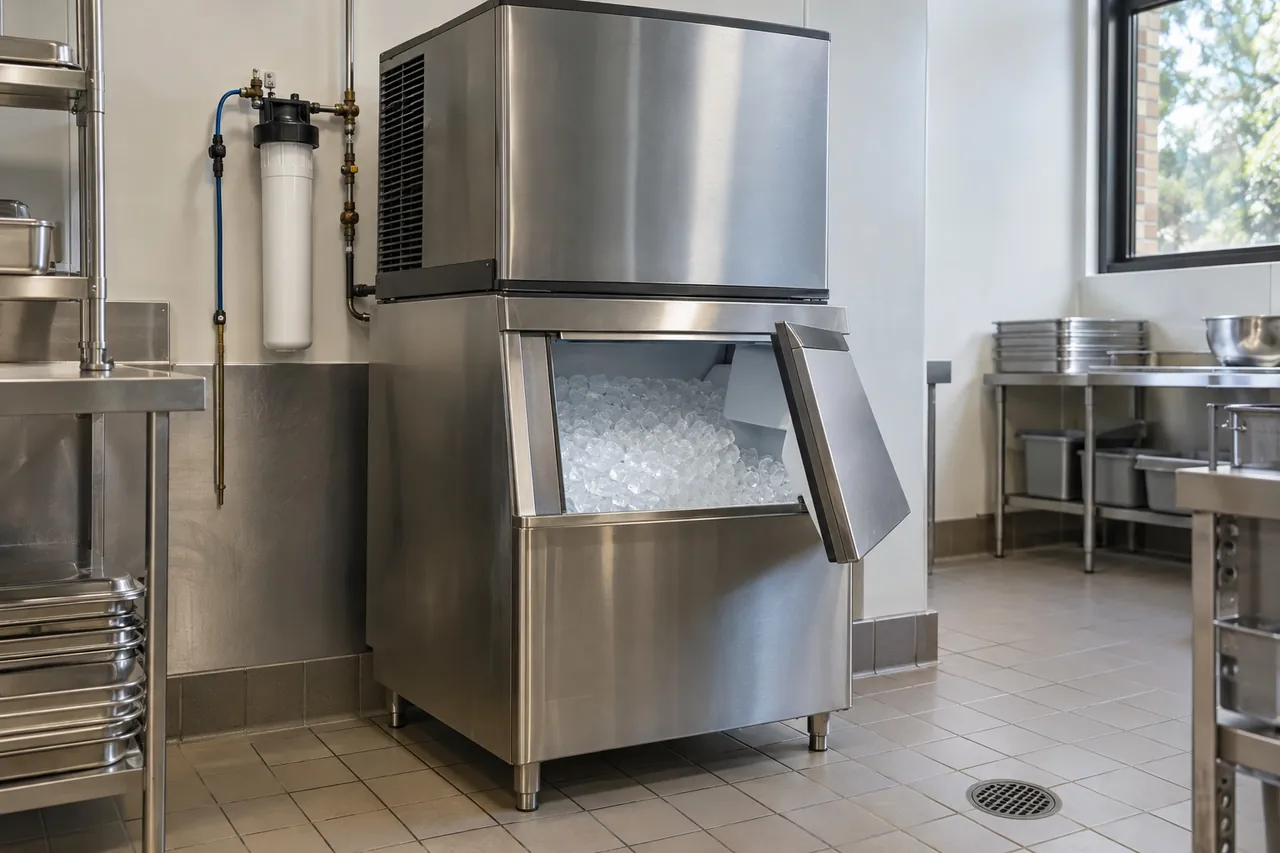
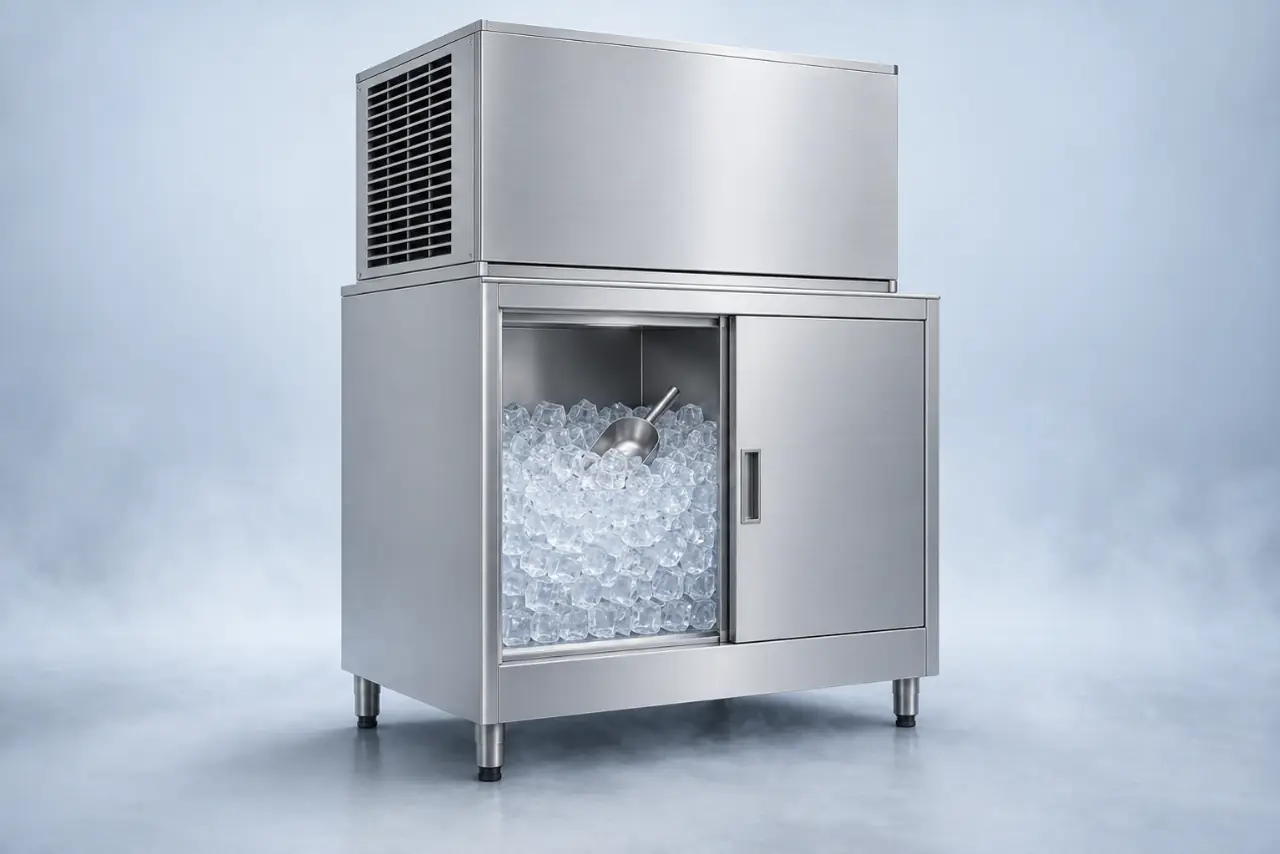
An ice bin is an insulated storage container that holds finished ice until it is used. In commercial kitchens, the term usually means the ice bin for an ice machine: a stainless steel or plastic-lined cabinet that sits under a modular ice machine head and collects the ice it harvests. Bars also use underbar and drop-in ice bins to keep a working stock of ice at the station.
Most ice bins are not refrigerated. They rely on thick foam insulation, a close-fitting door and a constant supply of new ice from the machine. A small amount of ice melts all the time; the melt water runs out through a drain at the bottom, which keeps the remaining ice dry. That is why every commercial ice storage bin needs a drain connection and why ice should never sit in standing water.
Undercounter ice makers have a built-in bin, typically 15–60 kg (33–130 lb) on Be There cube ice machines. Modular heads sit on separate bins, which on our range hold 100–400 kg (220–880 lb). Bagged ice for sale needs a different product altogether: a refrigerated ice merchandiser that holds ice below freezing.
This guide covers how to size an ice bin, which type suits a bar, restaurant or hotel, how long ice lasts in each kind of ice storage, and the hygiene rules that apply.
Types of ice bins and ice storage containers compared
| Type | Refrigerated? | Typical capacity | Best for |
|---|---|---|---|
| Built-in bin (undercounter ice maker) | No, insulated | 15–60 kg (33–130 lb) | Cafés, small bars |
| Ice machine storage bin (modular) | No, insulated | 100–400 kg (220–880 lb) | Restaurants, hotels, hospitals |
| Underbar or drop-in ice bin | No; some include a cold plate for drinks | 20–90 kg (45–200 lb) | Bar stations, beverage counters |
| Countertop ice bin or ice bucket with lid | No | 3–20 kg (7–45 lb) | Buffets, front-of-house service |
| Ice cart or transport tote | No, insulated | 50–150 kg (110–330 lb) | Moving ice from machine to bars |
| Ice merchandiser | Yes, −12 °C to −6 °C | About 30–100 ten-pound bags | Selling bagged ice at shops and fuel stations |
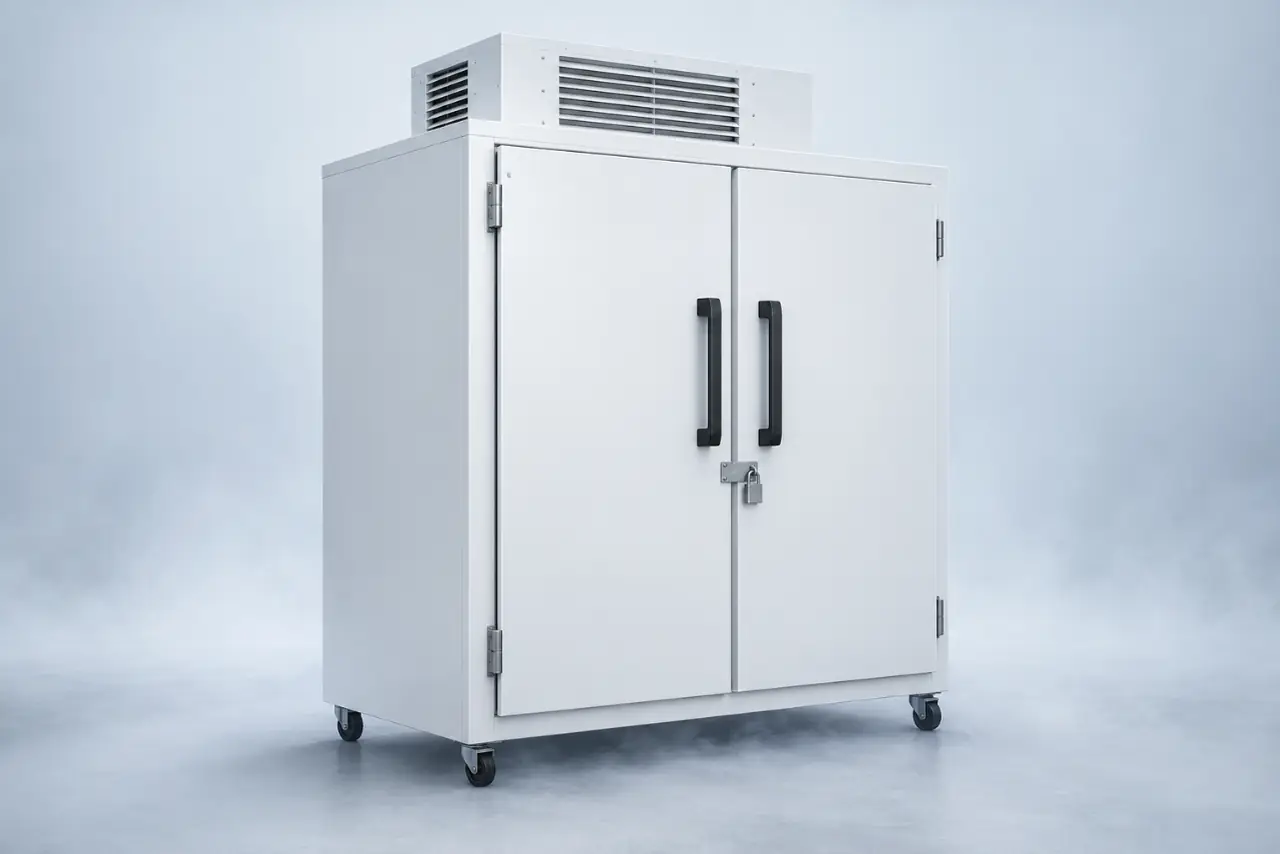
| Freezer or walk-in freezer | Yes, −18 °C (0 °F) or below | Any | Holding bagged ice or surplus |
Capacities above are typical market ranges, not limits. Many ice bin manufacturers rate capacity using a standard ice weight per volume, so two bins with the same interior volume should list similar capacities. If one claims far more, ask how it was measured.
For retail ice sales, see our bagged ice merchandiser buying guide, which covers bag capacity and outdoor use.
How big should an ice bin for an ice machine be?
The standard rule is simple: choose a bin that holds at least half of your daily ice demand. The machine builds up stock overnight and during quiet hours, and the bin covers the peak when demand runs faster than production. If your business has one large peak, such as a banquet or match day, size the bin to cover that peak in full.
To convert bin volume to ice weight, use bulk cube ice at about 0.5–0.55 kg per litre (30–35 lb per cubic foot). A bin with 400 litres (14 cu ft) of usable space holds about 200–220 kg (440–490 lb) of cube ice. Nugget and flake ice pack slightly differently, so check the bin's rating for your ice type.
| Daily ice demand | Minimum bin (half of demand) | Typical setup |
|---|---|---|
| 45 kg (100 lb) | 23 kg (50 lb) | Undercounter unit with built-in bin |
| 90 kg (200 lb) | 45 kg (100 lb) | Large undercounter or small head on a bin |
| 227 kg (500 lb) | 115 kg (250 lb) | Modular head on a 120–250 kg bin |
| 454 kg (1,000 lb) | 227 kg (500 lb) | Large head on a 250–400 kg bin |
Also check the bin's top opening matches the head footprint, that the door height suits your staff, and whether you need an adaptor kit. Our ice machine size calculator estimates daily demand by seats, rooms or beds and suggests a bin size, and the ice machine capacity guide explains production ratings.
Ice bins for bars: underbar, drop-in and countertop options
An ice bin for a bar holds the working ice a bartender scoops from during service. It is filled from the main ice machine, often with a transport tote, and drained and cleaned at the end of the night.
Underbar ice bin
An underbar ice bin (also called an undercounter ice bin) is a freestanding stainless steel unit set into the bar's underbar run, usually 76–91 cm (30–36 in) high to match the bar's working height. Many include a bottle rack, a sliding lid and a drain. Some have a cold plate: a metal block with beverage lines cast in, which chills soda and beer through contact with the ice.
Drop-in ice bin for a bar
A drop-in ice bin fits into a cut-out in a counter, with only the rim visible. It suits custom bars and buffet counters. Check the cut-out dimensions, drain position and whether the counter material can take condensation.
Countertop ice bins and buckets
A counter top ice bin or a large ice bucket with lid serves self-service drink stations and buffets. Choose double-wall stainless steel for durability; an insulated ice bin with a lid keeps ice far longer than an open bowl.
For bars with high demand, a dedicated machine directly above the bin removes the need to carry ice. Our undercounter ice machine guide covers machines sized for bar stations.
How long does ice last in an ice bin, cooler or freezer?
How long ice lasts depends on three things: the temperature around it, the insulation and whether melt water can drain away. Ice sitting in its own melt water melts much faster than ice that stays dry.
| Storage | Temperature | How long ice typically keeps | Notes |
|---|---|---|---|
| Ice machine bin, machine running | Room temperature, insulated | Continuously replenished | Rotate stock; do not let ice sit for days in a low-use bin |
| Ice machine bin, machine off | Room temperature, insulated | Hours to about a day | Depends on room heat and fill level |
| Underbar ice bin | Room temperature | One service shift | Drain and clean nightly |
| Insulated cooler or ice chest | Ambient | About 1–3 days, lid closed | Pre-chill and keep it shaded |
| Ice merchandiser | −12 °C to −6 °C (10–21 °F) | Weeks | Rotate bags first in, first out |
| Freezer | −18 °C (0 °F) | Months, but quality falls | Ice absorbs odours and slowly shrinks |
These are practical ranges, not guarantees; a hot bar or outdoor event shortens every figure. Ice does not "expire" in a food-safety sense when kept frozen, but it can pick up odours, freezer burn and contamination from handling. For businesses that make ice in batches, a freezer at −18 °C (0 °F) or an ice merchandiser keeps bagged ice hard and free-flowing.
Ice bin hygiene: Food Code rules and cleaning
The FDA Food Code treats ice for consumption as food. In practice, that means:
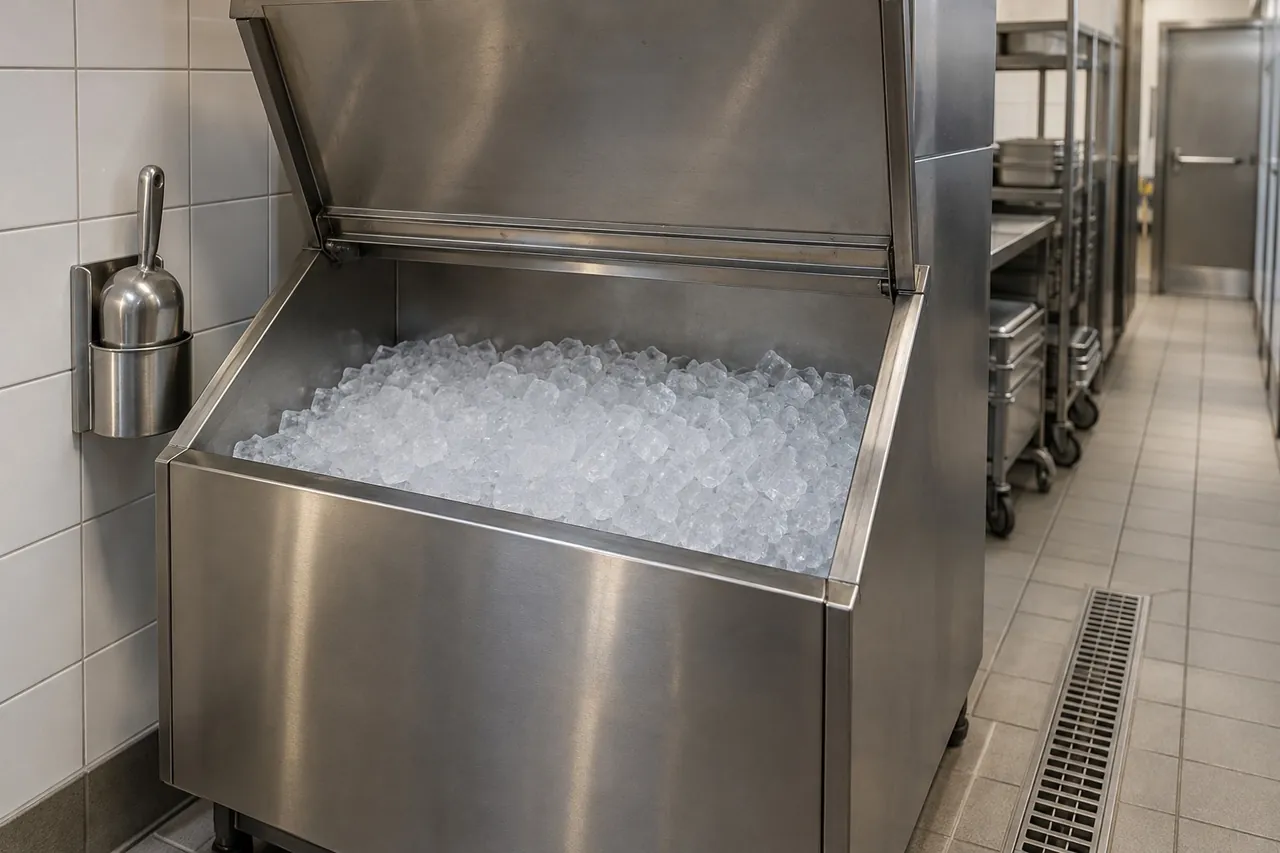
- Use a proper scoop. Scoop with a handled ice scoop, never a glass or bare hands. A broken glass in an ice bin means emptying and cleaning the whole bin.
- Store the scoop correctly. Keep it in a clean holder outside the ice, or with the handle out of the ice, not buried in it.
- Never use serving ice as a coolant first. Ice used to chill bottles, cans or food must not then be served in drinks.
- Keep the lid or door closed. It keeps out dust and reduces melting.
- Keep drains clear. A blocked drain leaves ice in standing water, which encourages slime.
Clean and sanitise the bin whenever you clean the ice machine, at least every 6 months and more often in busy or hard-water sites. Empty the ice, wash with a mild food-safe detergent, rinse, sanitise with an approved food-contact sanitiser, and let it air dry before refilling. Bar ice bins should be emptied, washed and dried at the end of each day. Our guide to cleaning a commercial ice machine includes a printable cleaning log.
When buying, look for food-equipment certification for your market, such as NSF/ANSI listing in the US or CE marking in Europe, and smooth, coved inner corners that are easy to wipe.
Ice containers for freezers and other storage questions
Not every business needs a dedicated bin. Small cafés, caterers and food trucks often store surplus ice in a freezer. An ice bin for a freezer or an ice storage container for a freezer should have a tight lid, food-grade plastic or stainless steel construction, and a size that fits the shelf without blocking airflow.
The best way to store ice in a freezer is to keep it in a sealed freezer ice bin with a lid or in tied food-grade bags, away from strong-smelling foods. Shake or stir bagged ice after freezing so it stays loose. Use stored ice within a few weeks for the best taste, and treat any ice that has thawed and refrozen as lower quality.
Ice maker stands and ice machine stands
An ice machine stand raises an undercounter unit or bin so that the drain has enough fall, staff can reach the door without bending, and floors can be cleaned underneath. Choose stainless steel with adjustable feet rated for the full weight of the machine plus ice.
Dry ice tote and storage
Dry ice is frozen carbon dioxide at about −78.5 °C (−109.3 °F). Store it in an insulated, vented dry ice tote or chest, never in an airtight container and never in an unventilated cold room, because the gas displaces oxygen.
Used ice bins for sale
A second-hand bin can save money, but check for cracked liners, wet or crushed insulation, worn door gaskets and corrosion around the drain.
How to choose ice storage: checklist
- Calculate daily demand and choose a bin that holds at least half of it, more for single big peaks.
- Match the format: built-in bin for small undercounter machines, modular bin under a head, underbar or drop-in bin at bar stations, merchandiser for selling bagged ice.
- Check fit: head footprint and adaptor, door height, overall height under ceilings, and floor drain position.
- Check construction: stainless steel exterior, seamless food-grade liner, thick foam insulation, a gasketed door and a removable scoop holder.
- Plan hygiene: drain access, easy-clean corners, and a cleaning schedule matched to the ice machine.
- Confirm certification for your market, such as NSF/ANSI or CE.
Be There supplies cube ice machines with matched storage bins from 100 to 400 kg, plus undercounter models with built-in bins of 15–60 kg. Tell us your daily demand, ice type and space available and we will propose a machine and bin combination. Request a quote and we reply within one working day.