Short answer
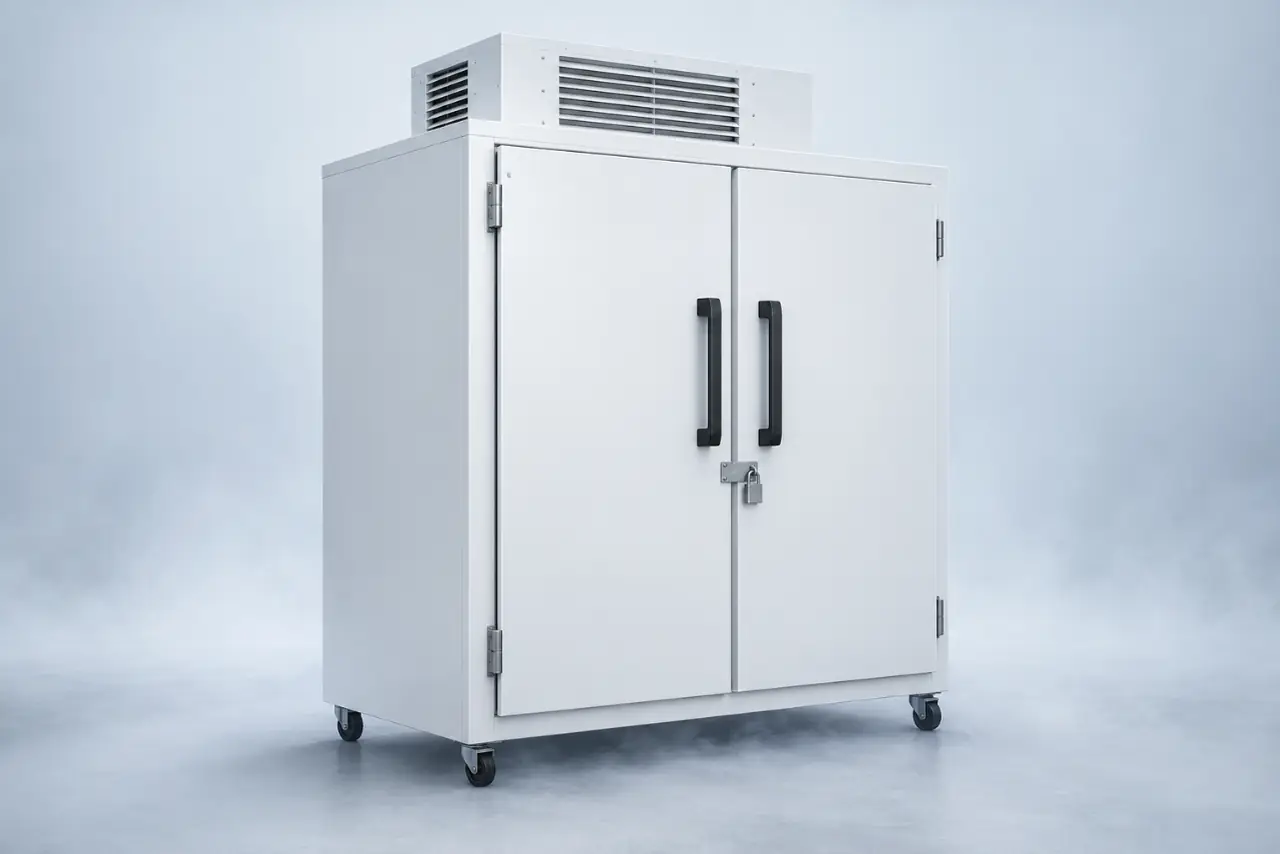
A lockable freezer is a commercial or domestic freezer fitted with a keyed, padlock or electronic lock on its lid or door. Businesses need one for outdoor or unattended sites, shared kitchens and high-value stock. Bagged-ice merchandisers hold −12 °C to −6 °C (10–21 °F) behind lockable solid doors; display and storage freezers hold −18 °C (0 °F) or colder.
Key takeaways
- A lockable freezer stops theft, tampering and accidental door opening, but it does not replace temperature monitoring or alarms.
- Outdoor bagged-ice merchandisers are almost always lockable and hold about 30–100 ten-pound bags at −12 °C to −6 °C (10–21 °F).
- A keyed cylinder lock suits most sites; use a padlock hasp or electronic lock when many staff share access or keys keep going missing.
- A chest freezer with lock holds cold better when opened, while an upright freezer with lock makes stock easier to see and rotate.
- Specify the lock type, number of keys and where the lock sits on the quotation, because it is cheaper to fit at the factory than afterwards.
What is a lockable freezer?
A lockable freezer is a freezer with a lock built into, or fitted onto, its lid or door so that only key holders can open it. Most commercial models use a keyed cylinder lock; others take a padlock or an electronic keypad.
The same idea applies to fridges and coolers. A freezer with lock can be a chest freezer in a back store, an upright freezer in a shared kitchen, a glass-door display freezer in a convenience store or a weatherproof bagged ice merchandiser outside a petrol station.
Locks matter in business because frozen stock is easy to carry away and expensive to replace. A full 500 L (about 18 cu ft) freezer can easily hold several hundred kilograms of product. Unauthorised opening also causes temperature problems: a lid left ajar overnight can turn a freezer full of ice cream or meat into waste.
A lock does three jobs:
- Security – stops theft by the public, staff or other tenants.
- Control – only trained staff load and unload, so stock rotation and hygiene rules are kept.
- Door discipline – a locked door cannot be left open by customers after hours.
What a lock does not do is keep the product cold. You still need the correct temperature range, a working door seal and, for valuable or regulated stock, a temperature alarm.
When does a business need a freezer with a lock?
You should treat a lock as standard, not optional, in these situations:
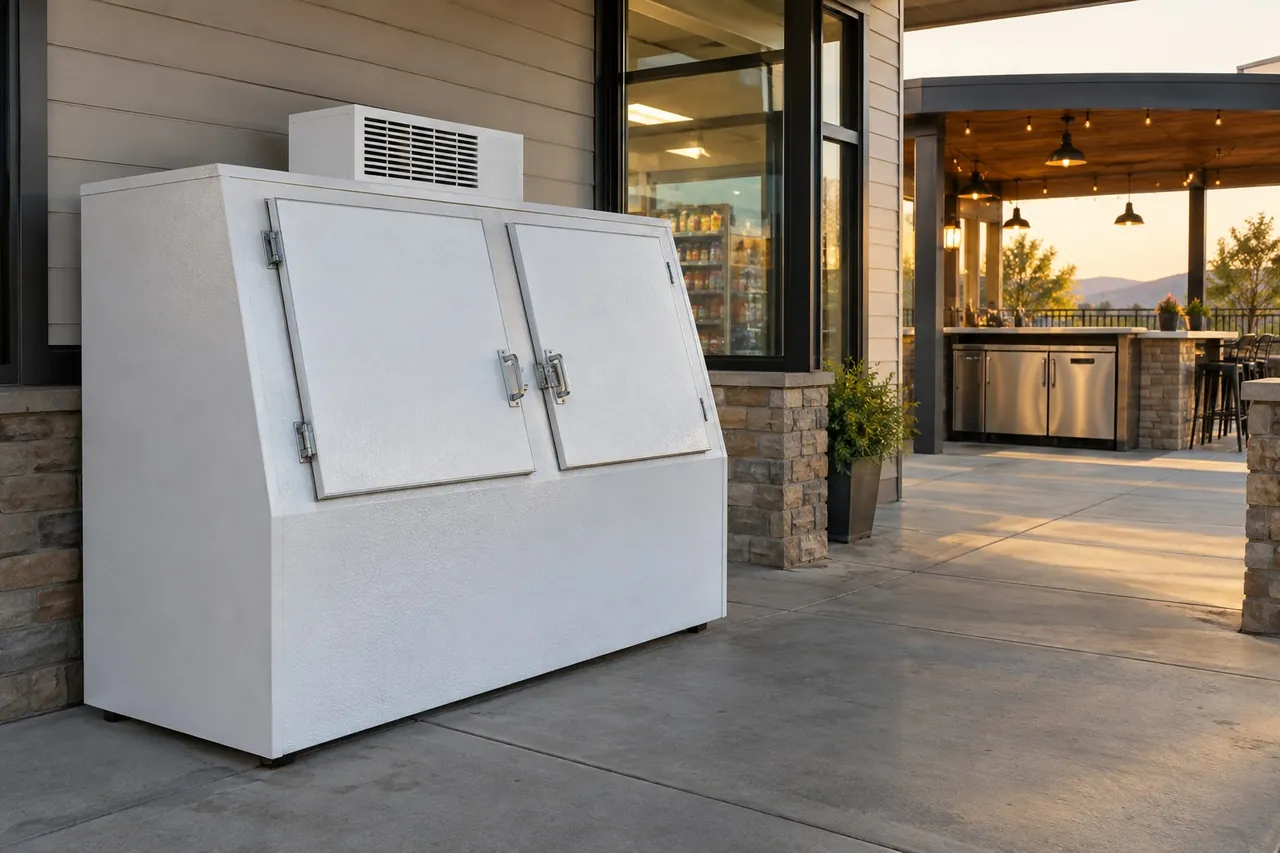
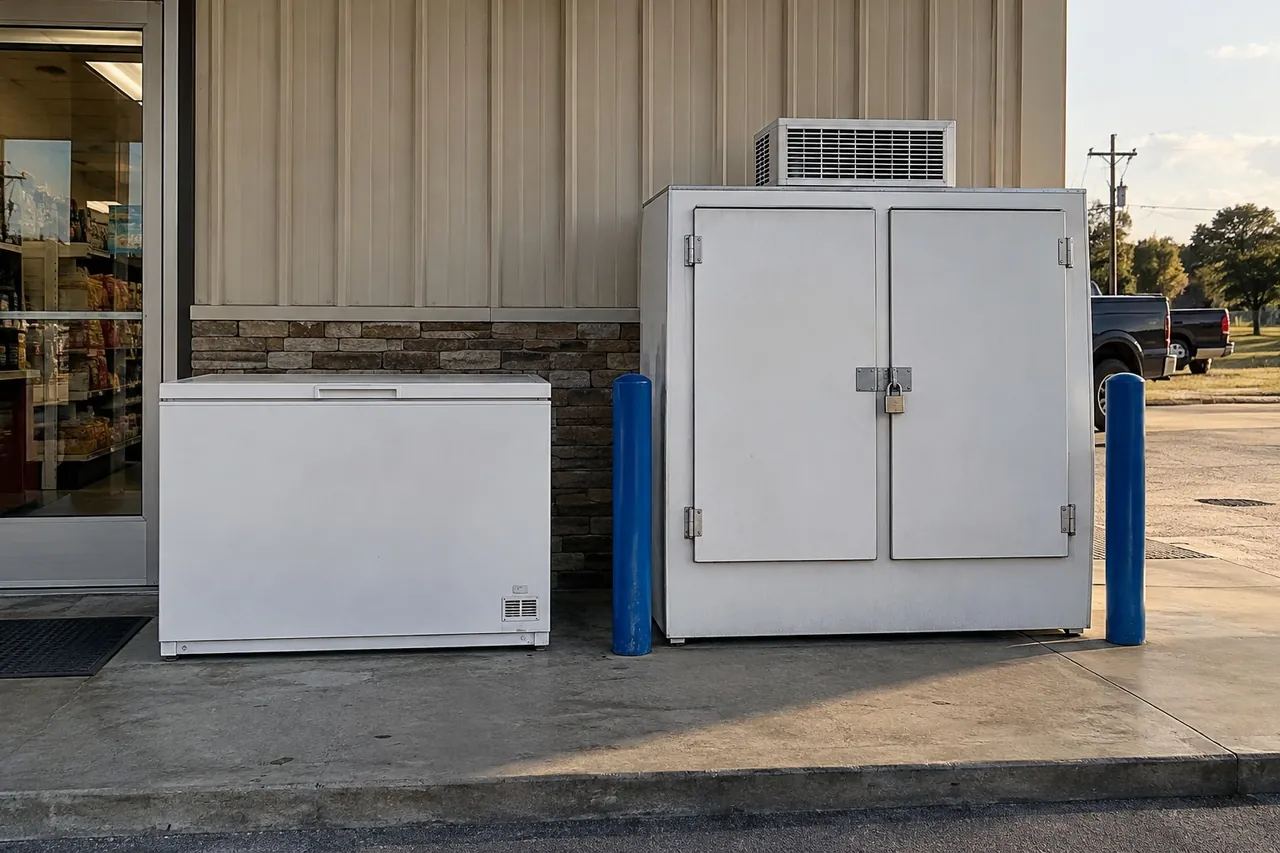
- Outdoor or unattended sites – bagged ice outside fuel stations, campsites, marinas and car washes. Staff are inside or absent, so the ice merchandiser is locked whenever it is not being restocked or sold.
- Shared or multi-tenant spaces – commissary kitchens, food halls and shared warehouses where several businesses use the same room.
- High-value stock – seafood, premium meat, ice cream novelties and branded frozen goods that are easy to resell.
- After-hours retail – a convenience store that closes part of the floor at night, or a kiosk that leaves equipment in a mall.
- Staff areas – hotels, hospitals and schools where staff and visitors share a pantry and you want to separate stock from personal food.
- Regulated or controlled products – some samples, medicines and lab materials must be stored in locked units. Rules depend on your country and product, so check the regulation that applies to you; a general-purpose freezer may not meet those standards.
If none of these apply, for example a reach-in freezer in a staffed restaurant kitchen, a lock is still cheap insurance against night-time losses. The key question is who can reach the freezer when your staff are not watching.
Which lock types are used on commercial freezers?
Four lock types cover almost every freezer with locking door or lid. The right one depends on how many people need access and how often keys go missing.
| Lock type | How it works | Best for | Watch out for |
|---|---|---|---|
| Keyed cylinder lock | Lock barrel built into the door or lid, usually 2 keys supplied | Most chest, upright and display freezers | Lost keys; order spares and record key numbers |
| Padlock hasp | Steel hasp on lid and cabinet takes your own padlock | Outdoor merchandisers, sites with master-key systems | Hasp must be bolted, not screwed into foam |
| Digital keypad | Battery or mains code lock, codes changed per shift | Shared kitchens, many staff | Battery life at low temperature; mechanical override |
| Electronic / remote lock | Unlocked by card, app or vending controller | Self-service or vending-style sales | Power failure mode and network reliability |
A chest freezer with lock and key often uses a spring-loaded key that pops out of the barrel when the lid is unlocked, so a key cannot be left in the lock by accident. On glass-door freezers the lock usually sits at the bottom of the door frame. Sliding-lid freezers use a lock that holds both lids shut at once.
Whatever lock you choose, ask how it is mounted. A lock fixed to the steel cabinet or to a metal plate foamed into the lid is far stronger than one screwed into thin plastic trim.
Chest freezer with lock or upright freezer with lock?
Both formats can be locked. The choice depends on space, how often you open the unit and how much stock you need to see at a glance.
| Factor | Lockable chest freezer | Upright freezer with lock |
|---|---|---|
| Typical lock position | Front of the lid, centre | Door edge or bottom of the door frame |
| Cold loss when opened | Low, because cold air stays in the chest | Higher, cold air falls out of the door |
| Floor space for 500 L (about 18 cu ft) | About 1.5–1.7 m (59–67 in) wide | About 0.7–0.8 m (28–31 in) wide |
| Access and stock rotation | Items stack; baskets help | Shelves make rotation easy |
| Typical use | Back-store bulk storage, ice, ice cream | Kitchens, retail display, shared pantries |
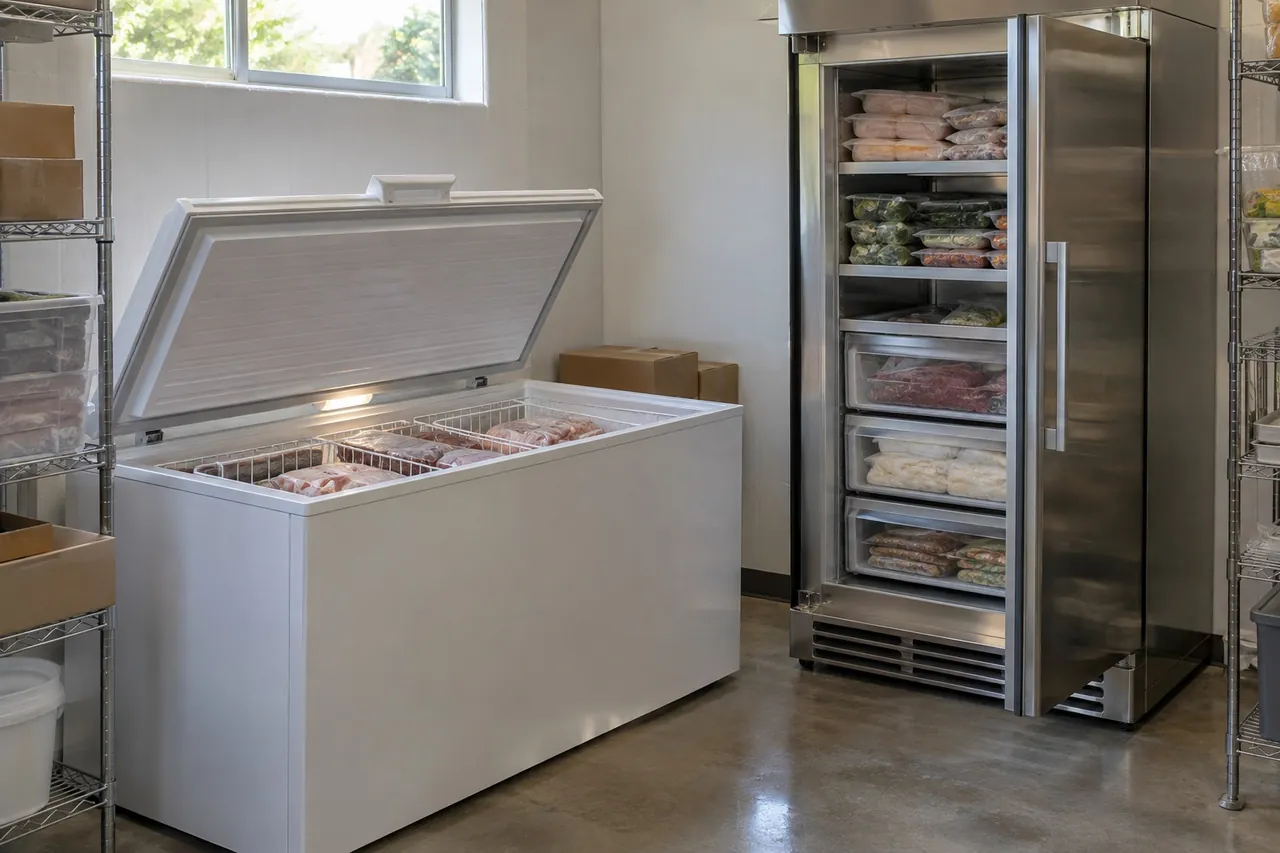
A lockable chest freezer (often called a deep freezer with lock) is the most economical way to secure bulk frozen stock: it uses less energy, keeps temperature well during a power cut and is hard to empty quickly. An upright freezer with lock wins where floor space is tight or staff need to pick items many times a day.
For customer-facing sales, a lockable glass-top chest or a glass-door upright display freezer lets shoppers see the stock while the cabinet stays locked after hours. Our chest freezer vs upright freezer guide compares the two formats in more depth.
Lockable ice merchandisers for outdoor bagged ice
The most common commercial lockable freezer is the bagged ice merchandiser. Because it usually stands outside a store or fuel station, it is built with solid, insulated doors and a lock as standard.
Be There ice merchandisers are solid-door, lockable freezers that hold bagged ice at −12 °C to −6 °C (10–21 °F). Capacities run from about 30 to 100 ten-pound (4.5 kg) bags, in indoor or weatherproof outdoor versions. A practical sizing rule is about 1.4 ten-pound bags per cubic foot of cabinet volume.
For an outdoor lockable unit, check:
- Ambient rating – the unit must hold temperature in your hottest month, in sun or shade.
- Lock and hasp quality – stainless or zinc-plated steel, with the hasp bolted through the door skin.
- Auto-defrost – frequent door openings bring in humid air; automatic defrost keeps bags from freezing together.
- Drainage and rain protection – sloped top, sealed electrics and a weatherproof plug.
- Certification – UL/ETL in North America or CE in Europe, as required by your market.
Our bagged ice merchandiser buying guide covers capacity and defrost type in detail, including how to site an outdoor unit in sun, shade and rain.
Small lockable fridges, lockable coolers and locking ice chests
Not every lockable unit is a freezer. Three other products come up when buyers search for a lockable cooler:
Small lockable fridge
A small lockable fridge is a compact refrigerator, often 40–150 L (1.4–5.3 cu ft), with a keyed door. Businesses use them in offices, hotel rooms, staff rooms and clinics. For drinks in a shop, a lockable glass-door unit from our display refrigerator range at +2 °C to +8 °C (36–46 °F) lets you sell by day and lock at night. If you store medicines or vaccines, use a purpose-built medical refrigerator that meets your health authority's rules; a general-purpose fridge is usually not enough.
Locking cooler and locking cooler ice chest
A locking cooler or locking cooler ice chest is a portable, unpowered insulated box with padlock holes or a built-in latch lock. It holds ice for hours or days, depending on insulation thickness and how full it is. Caterers, fishing boats and event vendors use them for transport and short-term storage.
Portable coolers are fine for a day at an event, but they do not hold a set temperature. For daily trading, bulk ice or anything that must stay at −18 °C (0 °F), you need a powered, lockable commercial freezer or merchandiser.
What a lock will not do: safety and monitoring
A lock protects stock from people. It does not protect it from equipment failure, so plan for both.
- Temperature alarms – a locked freezer that fails at night is only discovered in the morning. A simple high-temperature alarm or data logger with a phone alert costs little compared with a lost load. Log readings so you can prove the cold chain was kept.
- Key control – keep a key register, store spare keys away from the unit and change codes on keypad locks when staff leave.
- Child safety – never leave keys in a chest freezer lid. When a lockable chest freezer is retired, remove the lid or lock so nobody can be trapped inside.
- Power-failure behaviour – electronic locks must fail in a known state. Decide whether you prefer locked (security) or unlocked (access) when power is lost, and keep a mechanical override.
- Door seal – a lock pulls the door tight, but a torn gasket still leaks. Check seals every month on busy units.
For outdoor units, also think about vandalism: a steel hasp and a heavy padlock make it harder to pry the lid, and positioning the unit in camera view deters most attempts.
How to choose a lockable freezer: checklist
Use this checklist before you request a quote:
- Define the risk. Theft by the public, by staff or by other tenants, or just doors left open? This sets the lock type.
- Choose the format. Chest for bulk storage and ice, upright for kitchens and easy picking, glass-door or glass-top for sales.
- Set the temperature. Bagged ice −12 °C to −6 °C (10–21 °F); frozen food and ice cream −18 °C (0 °F) or colder.
- Size it. Count bags, cases or kilograms at peak and add 20% headroom.
- Pick the lock. Keyed cylinder, padlock hasp, keypad or electronic, plus the number of keys and whether all units should be keyed alike.
- Check the site. Indoor or outdoor, ambient temperature, sun, rain and power supply (voltage and frequency).
- Confirm certification. UL/ETL, NSF, CE or the mark your market needs.
- Add monitoring. A temperature alarm for anything valuable.
Be There supplies lockable ice merchandisers and commercial display freezers for export. Tell us the product, quantity, lock type and destination market through the inquiry form and we will quote FOB, CIF or DDP, with the lock specification confirmed on the proforma invoice.